Close EncounterModern Era
USS Nimitz Tic-Tac Incident
Nov 14, 2004
Pacific Ocean, off Baja California
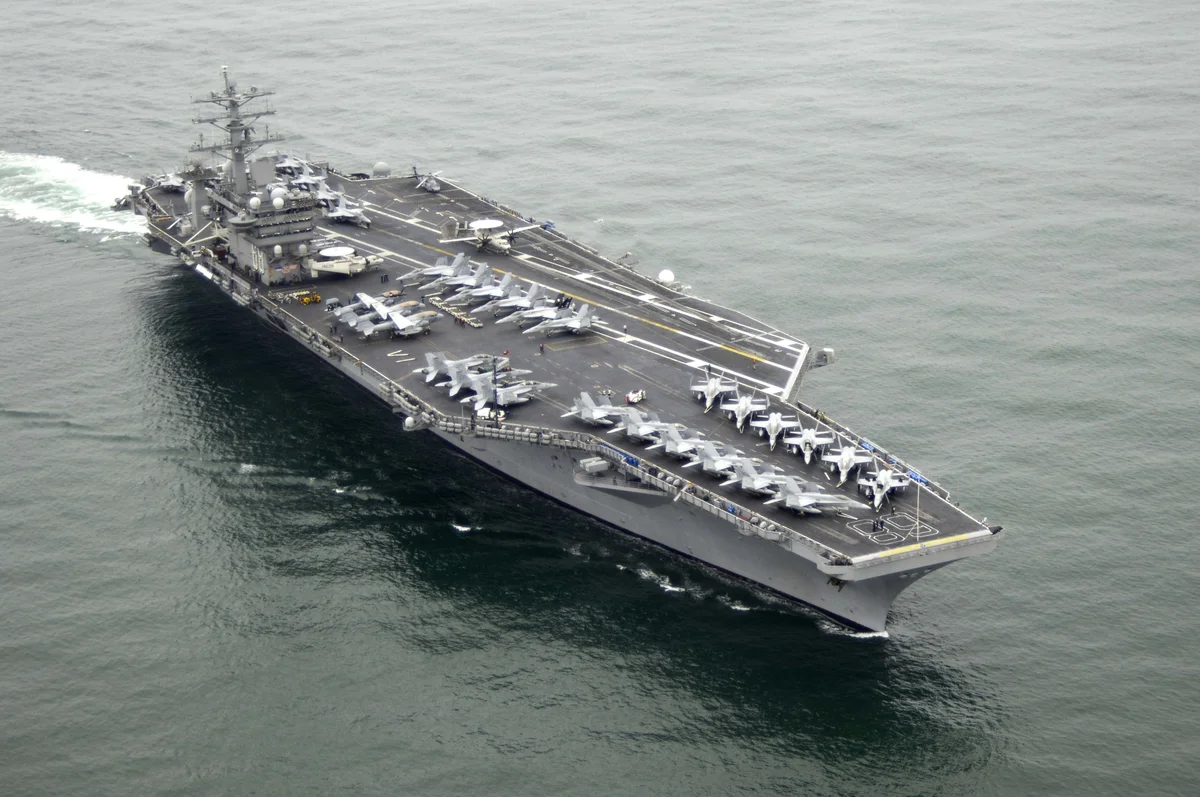
USS Nimitz (CVN-68), the aircraft carrier whose pilots encountered the 'Tic-Tac' UAP in November 2004 — Wikimedia Commons / Public Domain
Credibility Assessment
Exceptional
Military WitnessMultiple WitnessesRadar CorroboratedVideo EvidenceGovt. AcknowledgmentCongressional Record
Event Description
Observed Shape
Tic-Tac
Craft morphology

Non-Human Intelligence (NHI)
Reported Entities
No NHI encounter documented for this event.
On November 14, 2004, during a routine training exercise approximately 100 miles southwest of San Diego, the USS Princeton — an advanced Aegis cruiser attached to the Nimitz carrier strike group — had been tracking anomalous objects descending from 80,000 feet to 20,000 feet and then hovering for two weeks prior to the intercept. The objects appeared on multiple independent radar systems, including the SPY-1B radar aboard the Princeton, which had recently undergone a software upgrade that operators initially assumed was responsible for the anomalous returns. When the returns persisted, strike group operations officer Commander David Fravor was dispatched to investigate.
Fravor and his wingman Lieutenant Commander Jim Slaight, accompanied by two female WSOs, descended in their F/A-18F Super Hornets toward the last known position of the object. Below them, the ocean was visibly disturbed — a churning white water area roughly the size of a 737. Hovering above the disturbance at approximately 50 feet was a white, featureless, oblong object roughly 40 feet in length with no wings, no tail fins, no exhaust plume, and no visible means of propulsion. Fravor described it as looking exactly like a Tic-Tac breath mint.
As Fravor began a descending spiral to intercept, the object mirrored his maneuver — maintaining its relative position as if aware of his approach. When Fravor committed to a direct intercept, the object accelerated away instantaneously, leaving no visible exhaust or sonic boom, and reappeared on USS Princeton's radar 60 miles away in under a minute. A second Nimitz aircrew dispatched to the location recorded the now-famous FLIR1 video, showing the object maintaining erratic motion before leaving the sensor frame. The entire encounter was corroborated by the Princeton's radar operators and recorded on multiple independent sensor systems.
In 2017, the New York Times published a landmark investigation naming Fravor and revealing the existence of the Advanced Aerospace Threat Identification Program (AATIP). On April 27, 2020, the United States Department of Defense officially released three declassified videos — FLIR1, GIMBAL, and GOFAST — formally acknowledging they depicted unidentified aerial phenomena. Fravor testified before the House Oversight Subcommittee on National Security on July 26, 2023, stating under oath that the object demonstrated performance characteristics beyond any known human technology.
Video Evidence
The Nimitz Encounters — Documentary
Cmdr. David Fravor Describes the Encounter
5 Observables Detected
Instantaneous Acceleration
Hypersonic Velocity
Low Observability
Trans-Medium Travel
Anti-Gravity Lift
Suspicious Activity
Intelligence Agency
Cover-up Actions
Men in Black
Disinformation
Witness Suppression