SightingCold War
Sasovo Explosion — Ryazan Oblast, Russia, 1991
April 12, 1991
Sasovo, Ryazan Oblast, Russia
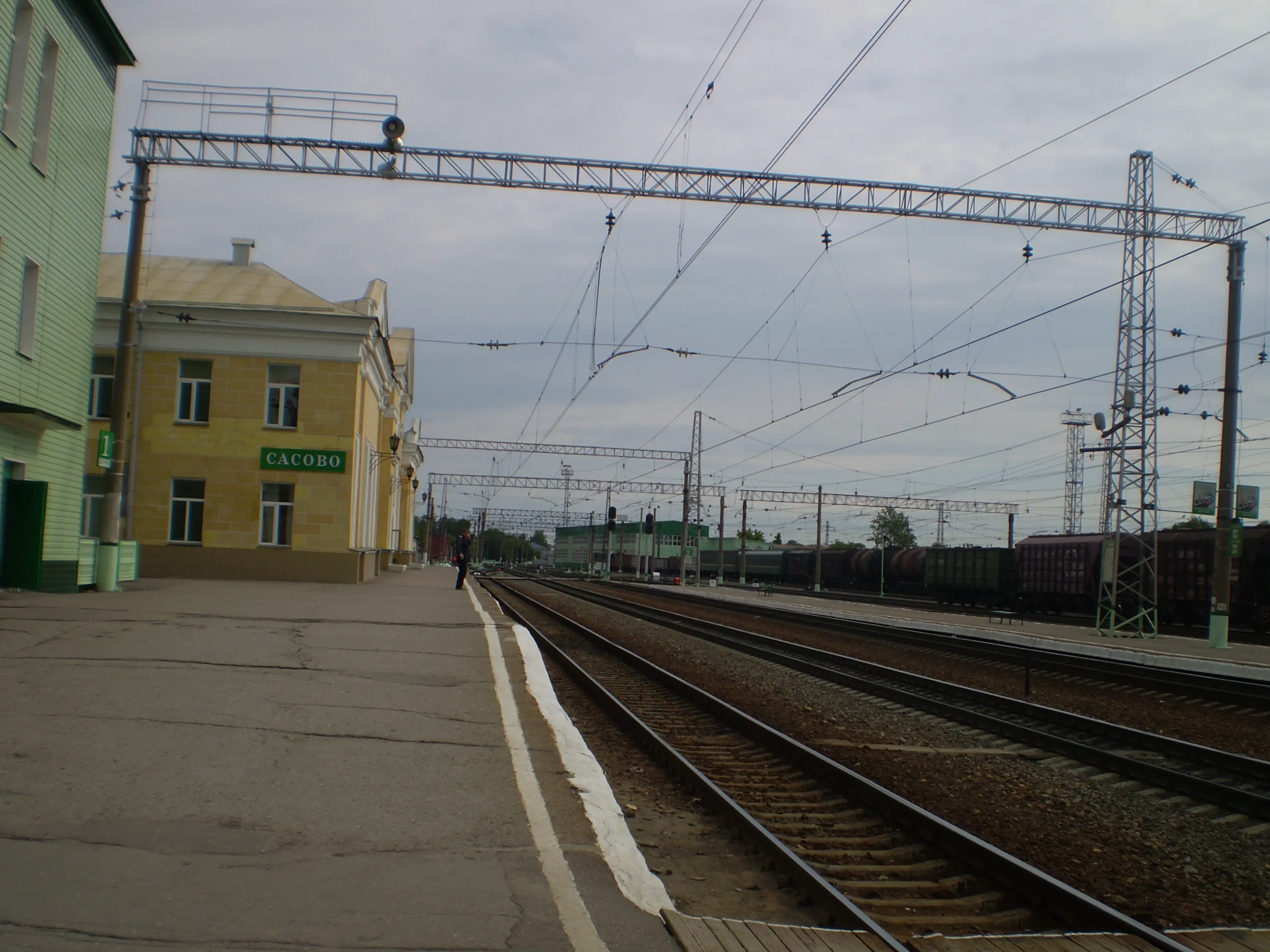
Sasovo railway station, Ryazan Oblast — the town where an unexplained explosion detonated one kilometre from the city centre on April 12, 1991. — Wikimedia Commons / CC BY-SA
Credibility Assessment
Moderate
Physical EvidenceMultiple WitnessesHistorical DocumentOfficial Report
Event Description
Observed Shape
Sphere
Craft morphology

Non-Human Intelligence (NHI)
Reported Entities
No NHI encounter documented for this event.
At 1:34 AM on April 12, 1991, a violent explosion erupted approximately one kilometre southwest of Sasovo, a mid-sized industrial town in Russia's Ryazan Oblast, roughly 300 kilometres southeast of Moscow. The blast jolted residents from their sleep, shook apartment buildings like an earthquake, and left a large crater in a field near the town's outskirts. No warning was issued; no military exercise was scheduled; no industrial accident had been reported. Soviet and Russian authorities launched an investigation but never produced a credible explanation for what detonated — or what fell from the sky moments before.
Numerous civilian residents of Sasovo and surrounding areas were awakened by the event and reported their observations to investigators and Soviet press. Multiple witnesses described seeing a large white or fiery sphere descending from the night sky in the minutes before the explosion, accompanied by a strange roaring sound. Some accounts described the light lasting several seconds, followed by a flash and the blast. Radio broadcast interference was reported by listeners approximately one minute before the detonation. In the hours preceding the event, local animals were observed behaving with unusual anxiety. No single named witness with official credentials — military, scientific, or government — has been publicly identified as an on-scene observer, as the event occurred in the early hours of the morning.
Residents closest to the explosion site reported a loud, prolonged roar preceding the detonation — described variously as a fighter jet flying overhead or a sustained mechanical howling. Multiple separate accounts converged on the image of a large, luminous spherical object descending from the sky before the explosion. Some witnesses described the initial flash as lasting several seconds rather than the instantaneous burst of a conventional detonation. The explosion itself was felt across a wide area: buildings rocked, roofs were torn from structures, and windows were blown out across a significant portion of Sasovo's residential blocks. The force of the event was felt at distances of hundreds of kilometres — water pipes were reported torn from mountings 15 kilometres away, and the shock wave reached at least 300 kilometres from the epicentre.
The physical evidence at the blast site presented investigators with a set of characteristics inconsistent with any conventional explosive event. The crater measured 28 metres in diameter and 3 to 4 metres in depth — but at its centre was a raised hillock approximately 3.5 metres across. No known conventional explosion produces a central mound within its own crater; all standard detonations excavate uniformly outward from the point of origin. A tree located 10 metres from the epicentre was found undamaged, a distribution anomaly incompatible with standard blast physics. The overall damage pattern was described as having a four-lobed distribution — again unlike the circular blast radius of a standard explosion. Additional peculiarities included hollow objects and glass light bulbs inside sealed rooms that had exploded from within, while inner window panes shattered where outer panes remained intact — the reverse of what blast overpressure would normally produce. Military explosives experts who examined the site concluded the crater morphology and damage distribution could not be explained by the detonation of chemical explosives of any type.
The 28-metre crater with its anomalous central hillock constitutes the most concrete physical record of the event. Investigators reported normal atmospheric radiation levels and normal chemical composition of ambient air at the site — consistent with the absence of any known explosive material. Soviet military specialists noted the complete absence of chemical residue, which is a reliable indicator left by any conventional explosive compound. Radio broadcast interference preceding the explosion was documented by multiple listeners as an electromagnetic precursor. The selective structural damage — certain rooms affected while adjacent spaces were unharmed — suggested a blast distribution mechanism unlike any standard explosive yield.
Soviet authorities attributed the explosion to accidental detonation of approximately 30 tonnes of ammonium nitrate fertiliser that had been delivered to a nearby field on April 5, 1991, one week before the event. Military explosives experts brought in to examine the site rejected this explanation categorically. Ammonium nitrate, while capable of catastrophic detonation under specific conditions, always produces identifiable chemical residues and combustion by-products; none were found. The crater morphology is also inconsistent with a surface or subsurface ammonium nitrate blast. The Soviet Academy of Sciences was reported to have been invited to contribute to the investigation, with results pending as of mid-April 1991. The CIA monitored the event through TASS dispatches and Soviet press coverage, as documented in CREST file C05517791, which was later released through Freedom of Information Act requests and made public via the National Security Archive and The Black Vault. No definitive official cause has ever been established.
No organised suppression of witnesses or deliberate disinformation campaign has been documented in connection with the Sasovo explosion. The Soviet government's ammonium nitrate explanation was publicly challenged by the military specialists who examined the site, and those challenges were reported in Soviet press, suggesting no concerted effort to silence expert dissent. The case remained an open investigation as of 1991 reporting. A second, smaller unexplained explosion occurred in the Sasovo region in 1992, approximately 9 kilometres from the original site, further complicating the tectonic degassing hypothesis that had been advanced by some Russian geophysicists.
The Sasovo explosion occupies a distinct position in the Cold War-era UAP record because it combines a documented, credible physical anomaly — the crater with the inexplicable central hillock — with both eyewitness testimony of an aerial precursor object and CIA monitoring of the incident. The complete absence of chemical explosive residue, the rejection of the official explanation by professional military analysts, and the anomalous blast-wave geometry collectively make this a case in which the official explanation fails on physical grounds, not merely on witness credibility. The event occurred on April 12, 1991 — the 30th anniversary of Yuri Gagarin's spaceflight, a coincidence noted by Soviet observers. Alternative scientific hypotheses have pointed to natural hydrogen degassing from tectonic fractures as a possible cause for the anomalous crater characteristics; this explanation, while not requiring an extraterrestrial cause, also remains unconfirmed. The CIA's decision to track and retain documentation of this event is the clearest indication that Western intelligence services regarded the Sasovo explosion as an unresolved and potentially significant incident.
5 Observables Detected
Instantaneous Acceleration
Hypersonic Velocity
Low Observability
Trans-Medium Travel
Anti-Gravity Lift
Suspicious Activity
Intelligence Agency
Cover-up Actions
Men in Black
Disinformation
Witness Suppression
Sources
governmentCIA CREST document C05517791 — 'Strange Roar Precedes Mysterious Blast in Sasovo', TASS dispatch monitored by CIA, April 1991
mediaMoscow Pravda — Sasovo explosion coverage, April 13–15, 1991
mediaScience Frontiers No. 93 — 'Strange Explosions at Sasovo', William Corliss, 1994mediaThe Black Vault — CIA declassified Sasovo documents