SightingCold War
Surabaya Dwikora UAP Wave — TNI Anti-Aircraft Engagement
September 18–24, 1964
Surabaya–Malang triangle, East Java, Indonesia
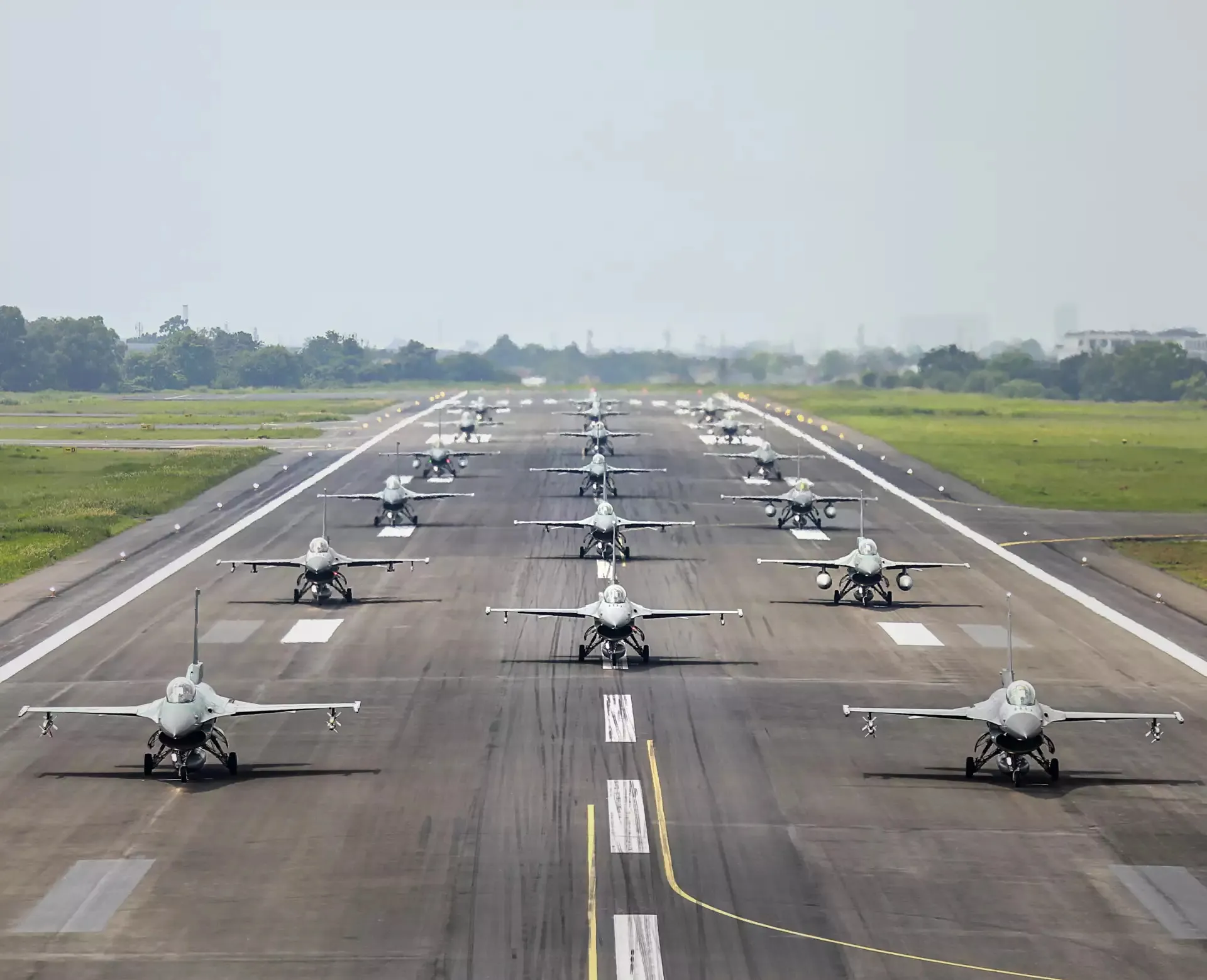
Indonesian Air Force (TNI-AU) aircraft in formation — the military service that tracked and fired on unidentified objects over Surabaya across seven nights in September 1964 during Operation Dwikora. — Wikimedia Commons (public domain)
Credibility Assessment
High
Radar CorroboratedMilitary WitnessMultiple WitnessesOfficial ReportGovt. AcknowledgmentPhysical Evidence
Event Description
Observed Shape
Disc
Craft morphology

Non-Human Intelligence (NHI)
Reported Entities
No NHI encounter documented for this event.
During the height of Indonesia's Konfrontasi (Confrontation) with Malaysia — Operation Dwikora — a sustained wave of unidentified aerial objects appeared nightly over the strategic triangle of Surabaya, Malang, and Bangkalan in East Java across seven consecutive nights beginning September 18, 1964. What distinguished this incident from isolated civilian sightings was its nature as a classified Radar-Visual event: the objects were simultaneously tracked on military radar systems and observed with the naked eye by Indonesian National Military (Tentara Nasional Indonesia, or TNI) personnel.
A radar station at Ngliyep, Malang, tracked targets appearing approximately 120 kilometers south of Surabaya. The objects consistently appeared after sunset and disappeared before dawn, flying at altitudes of approximately 1,200 meters. Their regularity and proximity to strategic military infrastructure prompted the National Air Defense Command (Komando Pertahanan Udara Nasional) to classify them initially as enemy aircraft conducting psychological warfare or economic disruption operations — a logical response given the intensity of cross-strait tensions with Malaysia and Britain at the time.
Witness accounts collected by the military described two distinct categories of objects. Some had dark bodies with a pronounced lower light source described as "seperti nyala api yang memanjang ke bawah" — like a flame extended downward. Others were described as elipsoidal, "berbentuk seperti buah mangga" — mango-shaped — with greenish-blue coloring and a humming sound variously described as "seperti gasing berputar," resembling a spinning top. At least one object was reported to have landed in a field south of Surabaya, though no recovery team appears to have reached the site.
TNI anti-aircraft artillery units engaged the objects repeatedly over the week with sustained barrages. No hits were recorded. Eyewitnesses reported that when targeted, the objects demonstrably changed altitude — behavior inconsistent with conventional aircraft operating on a fixed flight path. The engagement had a civilian cost: artillery shell fragments fell on residential areas in Sidoarjo, injuring bystanders on the ground below.
On September 29, 1964, the National Air Defense Command issued a formal classified analysis titled "Unknown Flights in Sector II (Surabaya)." The report concluded that the targets were real, their behavior resembled a combination of conventional aircraft and unmanned vehicles, but they could not be positively identified. On October 8, 1964, Presidential Officer Dr. J. Leimana issued a public statement urging calm and prohibiting public speculation — an unusual step that suggests the government took the incidents more seriously than official silence implied.
The incident was later documented in detail by Raden Jacob Salatun, founding head of LAPAN (Lembaga Penerbangan dan Antariksa Nasional, Indonesia's national space and aeronautics agency), in his 1982 book "UFO, Salah Satu Masalah Dunia Masa Kini" (UFO: One of Today's World Problems). Salatun's involvement gave the case institutional scientific credibility unusual for UAP documentation of the era. The Surabaya Dwikora Wave remains the most militarily documented UAP engagement in Southeast Asian history — a full week of nightly radar-visual contacts, active anti-aircraft fire with documented collateral damage, a formal classified military analysis, and a presidential-level public statement, yet no identification of the objects was ever produced.
5 Observables Detected
Instantaneous Acceleration
Hypersonic Velocity
Low Observability
Trans-Medium Travel
Anti-Gravity Lift
Suspicious Activity
Intelligence Agency
Cover-up Actions
Men in Black
Disinformation
Witness Suppression
Sources
mediaKompas: "Cerita TNI Diganggu UFO saat Operasi Dwikora" (Aug 27, 2023)
academicJacob Salatun, UFO Salah Satu Masalah Dunia Masa Kini (LAPAN, 1982)
mediaBETA UFO Indonesia: Pemunculan UFO secara massal pada masa Dwikora, September 1964