
Credibility Audit
6 factors- Military Witness+3
- Pilot Witness+3
- Radar Corroborated+3
- Multiple Witnesses+2
- Govt. Acknowledgment+4
- Official Report+1
- 0–3
- 4–7
- 8–11
- 12–16
- 17+
DoD Observables
3 of 5- Instantaneous Acceleration
- Hypersonic Velocity
- Low Observability
- Trans-Medium Travel
- Anti-Gravity Lift
Event Description
Craft morphology
On the night of May 19, 1986, the Brazilian Air Force launched the most extensive military UAP intercept operation in the nation's history. Air traffic controllers at São José dos Campos and Brasília simultaneously detected 21 unidentified objects on radar, traveling at speeds ranging from 250 to 1,500 kilometers per hour and performing maneuvers inconsistent with any known aircraft type. The contacts appeared on both primary and secondary radar systems, ruling out sensor artifacts. Civilian air traffic pilots operating in the affected airspace also reported the objects, providing independent corroboration from non-military observers.
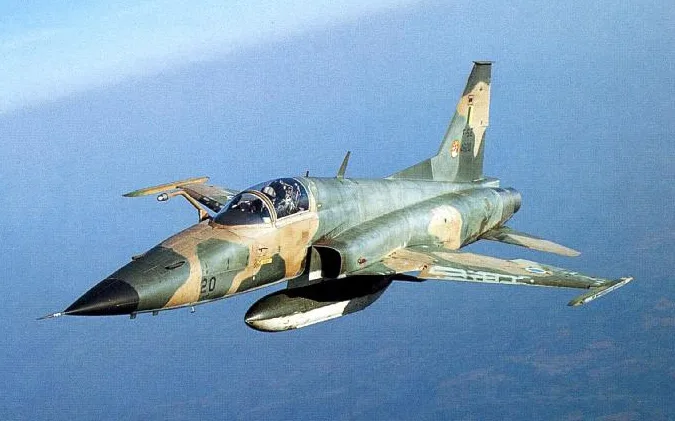
The Brazilian Air Force scrambled multiple interceptor aircraft in response: F-5E Tigers, Mirage IIIs, and AT-26 Xavantes were all deployed. Eight aircraft participated in intercept attempts. Pilots achieved visual contact with luminous objects described as spherical or discoid, which outmaneuvered and outran the pursuing fighters consistently. When pilots attempted to close, the objects accelerated to maintain distance. The intercept attempts extended across approximately four hours and multiple air defense sectors. No attribution was established.
The following day, Air Force Minister Brigadier Octávio Moreira Lima held a press conference — a step extraordinary for any nation's military — openly confirming the events and stating that the Brazilian Air Force had no conventional explanation for what its pilots and radar operators had observed. The pilots who had flown the intercept missions appeared alongside Moreira Lima. The press conference represented one of the most significant official military UAP acknowledgments by any government in the Cold War era.
The Brazilian Air Force subsequently classified the case records. A 2009 government transparency initiative — making Brazil one of the few countries to have formally declassified and publicly released military UAP investigation files — resulted in the documents being turned over to the Brazilian Committee for UFO Research (CBPDV). The released files confirmed the scope of the radar contacts, the intercept attempts, and the absence of any conventional explanation. Operation Night Lights remains the most comprehensively documented mass military UAP intercept event in South American history.