
Credibility Audit
3 factors- Military Witness+3
- Multiple Witnesses+2
- Official Report+1
- 0–3
- 4–7
- 8–11
- 12–16
- 17+
DoD Observables
1 of 5- Instantaneous Acceleration
- Hypersonic Velocity
- Low Observability
- Trans-Medium Travel
- Anti-Gravity Lift
Event Description
In the early 1980s, an officer of the Wojskowe Służby Wewnętrzne (WSW) — the Polish People's Army internal security and intelligence service — stationed at Special Object 3002 in Brzeźnica-Kolonia, Wielkopolskie Voivodeship, reported observing an unidentified aerial object conduct multiple, deliberate passes over the facility's nuclear warhead storage area. The account was later documented by American researcher Robert Hastings, whose decades-long project to collect military testimony about UAP encounters near nuclear weapons sites resulted in his 2008 book "UFOs and Nukes: Extraordinary Encounters at Nuclear Weapons Sites." The Polish account reached Hastings around 2010, when a retired colonel and ranking WSW officer — who said Hastings' book "struck a few familiar chords on this side of the ocean" — provided written testimony corroborated by at least two other Polish nationals with knowledge of verifiable aspects of his account.
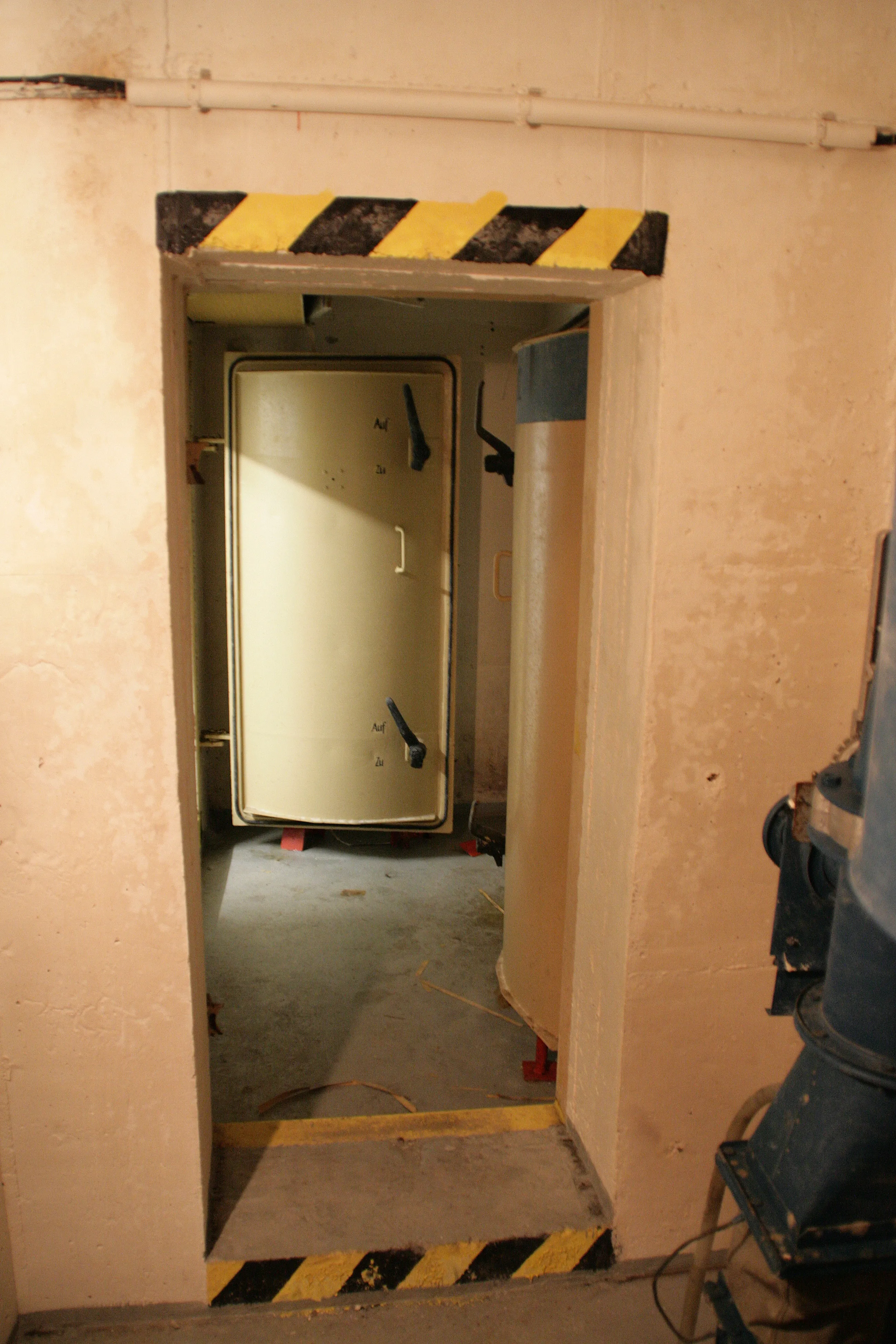
Object 3002 was no ordinary posting. Under a classified 1967 bilateral agreement between the USSR and the Polish People's Republic, code-named "Program Vistula," three underground nuclear warhead depositories were constructed in the forests of western Poland: at Podborsko (Object 3001), Templewo (Object 3003), and Brzeźnica-Kolonia (Object 3002). Built between 1972 and 1976 by Polish Army engineers and then transferred to Soviet military control, each facility contained two T-7 "Monolit" reinforced concrete bunkers sunk several meters into the earth, each with a volume of 3,000 cubic meters. Object 3002 at Brzeźnica-Kolonia was capable of storing between 200 and nearly 300 tactical nuclear warheads with yields ranging from an estimated 0.5 to 500 kilotons. The existence of the sites was so tightly held that, as late as the mid-1980s, only twelve people in Poland — including General Wojciech Jaruzelski — were aware that nuclear warheads were stored on Polish soil. Soviet forces did not withdraw from the site until the early 1990s.
According to the testimony compiled by Hastings, the unidentified object appeared over the rectangular nuclear storage area of the base and proceeded diagonally across it, employing what witnesses described as a very bright cone of light — likened to a huge searchlight — that appeared visually solid. The object used the light in a deliberate, repetitive cycle: shining the beam down to the ground, shutting it off, moving laterally, then shining it down again some distance further. Personnel on site initially assumed the object was an American silent helicopter conducting surveillance. No malfunctions of electronic equipment were recorded at the facility during the event. Critically, the object produced no radar return — it was invisible to the site's detection systems despite its visible presence and the powerful light it projected. That evening and into the following night, military radio communications were interrupted three times; one radio transmission was cut off mid-transmission, and encrypted coded messages received from Warsaw arrived in the wrong sequence, suggesting a disruption of the secure communications network serving the base.
The combination of radar invisibility and communications disruption places this account within a well-documented global pattern of UAP behavior at nuclear facilities. Hastings has assembled testimony from over 160 military veterans spanning the United States, Soviet Union, and allied nations who described analogous encounters: objects appearing over ICBM bases and warhead storage sites, evading radar, and in several cases actively interfering with weapons systems. The most extensively documented Soviet-era parallel is the October 1982 incident at a missile base in Ukraine, where Soviet documents — later described in congressional testimony by investigative journalist George Knapp — alleged that an unidentified object temporarily activated launch authorization codes for nuclear missiles, an event that required deliberate human override to prevent an accidental launch. The Brzeźnica incident, while not involving weapons activation, shares the core pattern: an object with sophisticated electromagnetic characteristics operating with apparent awareness of and interest in the nuclear storage infrastructure below.
The Soviet-era classification system governing access to the Polish depot sites meant that no formal investigative report on any anomalous sightings was likely to have been filed through standard channels — WSW officers operated under strict compartmentalization, and reporting of incidents that could be interpreted as security failures or unexplained vulnerabilities carried professional risk. This institutional silence is consistent with the pattern Robert Hastings encountered across multiple nations: firsthand military testimony that exists only because individual officers chose, decades later, to provide it outside official channels. The Brzeźnica-Kolonia case, documented by Hastings as part of his ongoing research, represents one of the few known public accounts of UAP activity at a Warsaw Pact nuclear weapons storage site and stands as a Cold War counterpart to the American nuclear site encounters that Hastings spent four decades documenting.
Sources
- witnessRetired WSW Colonel testimony to Robert Hastings — UFO Chronicles, February 2012
- academicHastings, Robert L. — "UFOs and Nukes: Extraordinary Encounters at Nuclear Weapons Sites" (2008, updated 2017)
- media"Mysterious Objects in Brzeznica Kolonia — a Nuclear Inferno in Poland?" — Girl on a Trail (2021)
- academicKobiałka, Dawid — "The destroyer of worlds hidden in the forest: Cold War nuclear warhead sites in Poland" — Antiquity (2019)