SightingModern Era
Skopje UFO Wave — North Macedonia, 2001
August 2001
Skopje, North Macedonia
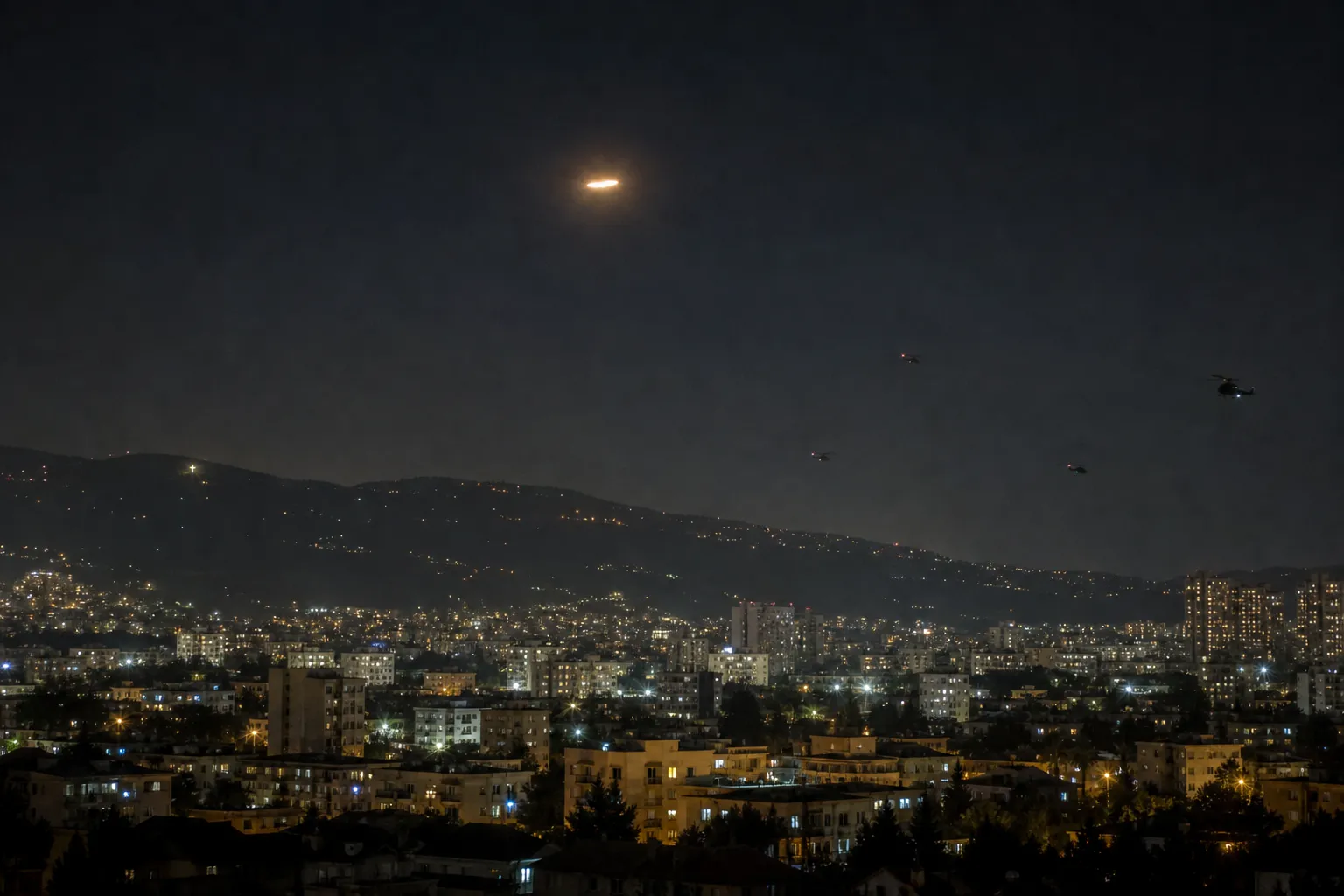
AI-rendered impression — an unidentified luminous object over the Skopje skyline at night, visible against military aircraft operating in the background, summer 2001 — UAP Archive / openai (gpt-image-1)
Credibility Assessment
Low
Multiple Witnesses
Event Description
In the summer of 2001, the Republic of Macedonia (now North Macedonia) was undergoing one of the most militarized periods in its brief post-independence history. The Albanian insurgency — known as the 2001 insurgency — had brought NATO military forces, Macedonian Army air assets, and international peacekeeping aircraft into the country's airspace simultaneously. Citizens of Skopje were accustomed to observing military aircraft and helicopters. Against this background of heightened aerial activity, multiple residents of Skopje reported unidentified aerial objects that did not match the operational profile of any military or civilian aircraft they had observed. The reports entered both the NUFORC database and the records of Balkan regional UAP researchers.
Multiple Skopje residents submitted sighting reports during the summer of 2001. The witnesses were situated in a context that made them involuntary aviation observers — living under an active aerial operation involving NATO helicopters, Macedonian Air Brigade aircraft, and international military traffic. This background provided an implicit comparative baseline: observers accustomed to military aircraft were better positioned to identify anomalous behavior. The specific reports that distinguished unidentified objects from known military traffic came from civilians in Skopje who explicitly noted the contrast between the objects and the aircraft they had become familiar with during the conflict period.
During August 2001, observers in Skopje reported luminous or structured objects in the sky that did not match the navigational light patterns, flight paths, or acoustic signatures of any aircraft in the operational theater. The specific reported characteristics — luminous behavior at night, silent operation, non-standard flight paths — contrasted with the easily identifiable military aircraft operating over Skopje at the time. The NUFORC database entry (case 135037) documents a sighting from this period in Macedonia. Regional Balkan researchers catalogued the reports in the context of the broader Balkan UAP history that includes the well-documented Yugoslav-era cases.
The most significant anomaly is the observational context: in a heavily surveilled airspace with NATO radar coverage (through the Kosovo Force operation), observers reporting objects that do not match any known traffic in the theater were effectively reporting objects invisible to or unreported by military air traffic control. NATO's KFOR air management infrastructure, which was actively tracking all aircraft in the region, had no publicly documented record of the objects witnesses reported — suggesting they either fell below radar detection threshold or were present in a gap in sensor coverage.
No instrument data, radar records, or physical evidence specific to the Skopje sightings have been made public. NATO's KFOR air operations records from 2001 remain partially classified. No photographic documentation from the Skopje reports has been indexed in open sources.
No official Macedonian or NATO response to the civilian sighting reports was documented publicly. The operational security surrounding KFOR and the Macedonian Air Brigade's activities during the insurgency made any inquiry about aerial anomalies unlikely to receive official acknowledgment. The sightings were handled entirely through the civilian UAP reporting infrastructure.
No evidence of suppression. The military operational context provided a natural alternative explanation framework that may have caused witnesses to hesitate before reporting, and the political instability of the period likely reduced official attention to civilian anomaly reports.
The 2001 Skopje reports are the most contemporaneously documented UAP observations from the Republic of North Macedonia in the indexed record. Their significance is primarily geographic — establishing the country's presence in the global archive — and contextual: the militarized airspace of summer 2001 provides an unusual comparative baseline. North Macedonia falls within the geographic zone covered by the Yugoslav-era UAP history (Pan Adria 1977, Operation Vuk 1975), and its entry into the archive connects it to that documented regional pattern. The NUFORC database entry provides the minimum provenance for archive inclusion.
5 Observables Detected
Instantaneous Acceleration
Hypersonic Velocity
Low Observability
Trans-Medium Travel
Anti-Gravity Lift
Suspicious Activity
Intelligence Agency
Cover-up Actions
Men in Black
Disinformation
Witness Suppression