
Credibility Audit
5 factors- Military Witness+3
- Pilot Witness+3
- Multiple Witnesses+2
- Official Report+1
- Govt. Acknowledgment+4
- 0–3
- 4–7
- 8–11
- 12–16
- 17+
DoD Observables
4 of 5- Instantaneous Acceleration
- Hypersonic Velocity
- Low Observability
- Trans-Medium Travel
- Anti-Gravity Lift
Event Description
Craft morphology
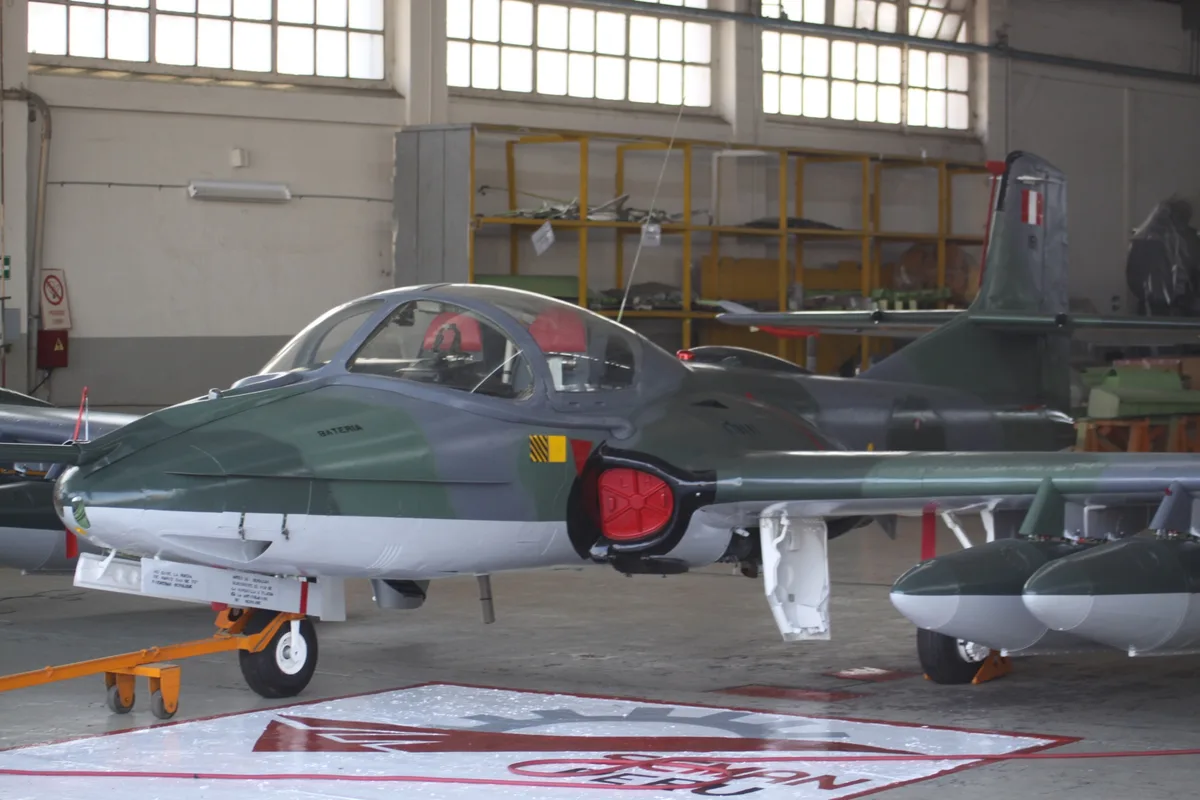
On April 11, 1980, at 7:15 AM, Peruvian Air Force Captain Oscar Santa María Huanca was on duty at La Joya Air Base near Arequipa when radar operators detected an unidentified object hovering at approximately 600 meters altitude above the airfield. The base commander ordered Santa María to identify and eliminate the contact. Santa María scrambled his Cessna A-37B Dragonfly — an armed light attack aircraft — and climbed toward the target.
At close range, Santa María described the object as roughly spherical, approximately ten meters in diameter, with a smooth polished metallic surface and no visible windows, doors, wings, engine inlets, or exhaust. It showed no markings or control surfaces. Santa María opened fire with his 20mm cannon, firing 64 rounds at the object from a range of approximately 600 meters. Rounds appeared to impact the object's hull with no visible effect — no deformation, no smoke, no debris, no altitude loss. The object then began to ascend and accelerate away.
Santa María pursued for approximately 22 minutes in a chase that took him to 19,200 meters — near the service ceiling of his aircraft — as the object consistently maintained a lead distance that kept it just beyond effective weapons range. When Santa María finally received orders to break off due to critically low fuel state, the object remained visible and appeared to halt its ascent once the pursuit ended. The encounter was tracked on La Joya's ground radar throughout, providing independent corroboration of the object's maneuvers and Santa María's pursuit profile.
Santa María filed a detailed official report to the Peruvian Air Force, which investigated the incident formally. The case became one of the most significant military UAP encounters in South American aviation history — notable for the duration and nature of the engagement, the failure of cannon fire to damage or deter the object, and the apparent responsiveness of the craft's flight behavior to the pursuer's actions and fuel state. Santa María recounted the encounter on multiple public occasions across the following decades and remained consistent in his account. He was promoted to general, a career trajectory inconsistent with the account being treated by the Peruvian Air Force as an embarrassment or fabrication.