
Credibility Audit
4 factors- Military Witness+3
- Pilot Witness+3
- Radar Corroborated+3
- Official Report+1
- 0–3
- 4–7
- 8–11
- 12–16
- 17+
DoD Observables
2 of 5- Instantaneous Acceleration
- Hypersonic Velocity
- Low Observability
- Trans-Medium Travel
- Anti-Gravity Lift
Event Description
Craft morphology
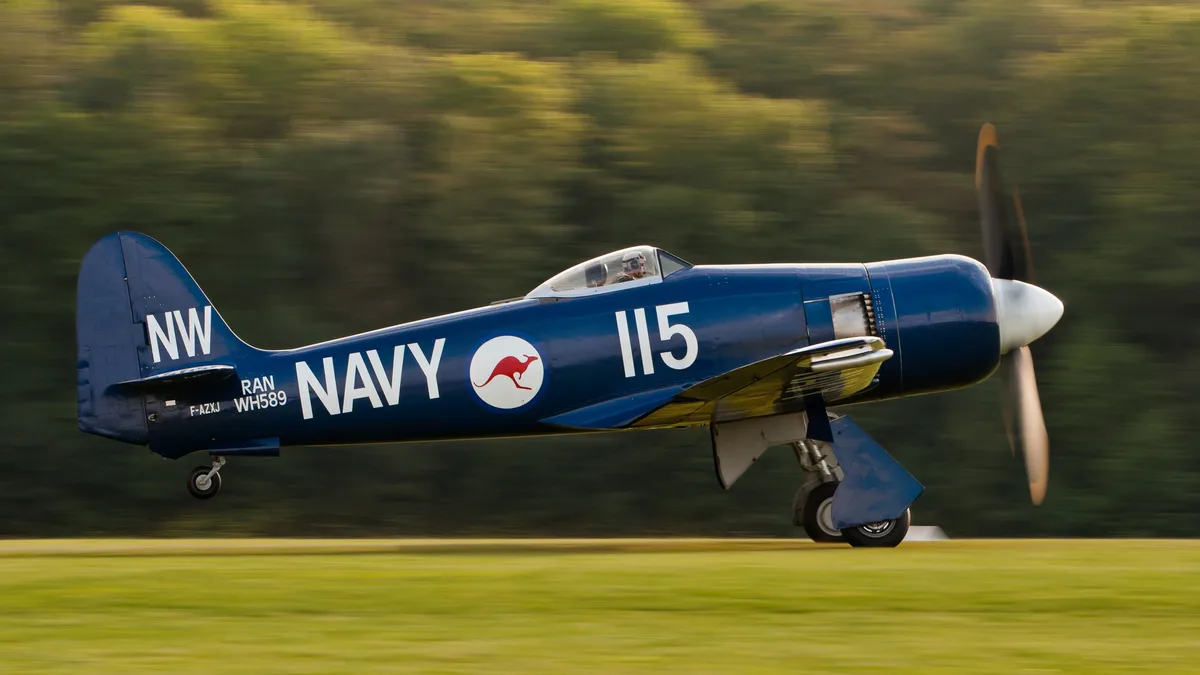
On the night of August 31, 1954, Lieutenant Commander James Holman of the Royal Australian Navy was conducting a solo night navigation exercise in a Hawker Sea Fury piston-engine fighter approximately 20 miles northeast of HMAS Albatross, the naval air station at Nowra, New South Wales. Flying at 4,500 feet at approximately 230 knots, Holman became aware of an intense luminosity approaching rapidly from the north.
Two bright objects took up station on either side of his aircraft, maintaining precise formation relative to his speed and heading — an observation that immediately distinguished the objects from any natural atmospheric phenomenon and suggested controlled flight. A third, less brilliant object appeared ahead on his track. The flanking objects pulsed with intense white light. When Holman banked to obtain a better visual fix, the objects maintained their relative formation position, turning with him — responsive behavior that further indicated guidance of some kind. The total observation lasted approximately 20 minutes, an unusually extended duration for any military UAP encounter.
Holman contacted HMAS Albatross radar control during the encounter. Ground radar subsequently acquired an unidentified return in his position area — providing independent electromagnetic corroboration of the visual observation. When Holman executed a harder turn toward the objects to close distance for a better look, they separated and departed to the north at high speed, disappearing within seconds. The formation behavior — precision station-keeping relative to a maneuvering aircraft over a 20-minute period, followed by coordinated high-speed departure — is inconsistent with any known natural luminous phenomenon including ball lightning, St. Elmo's Fire, or optical phenomena associated with temperature inversions.
The Royal Australian Navy investigated and forwarded the case to the Royal Australian Air Force for review under Project Hibal. RAAF investigators found no satisfactory conventional explanation for the extended dual-formation flight, the radar corroboration, or the controlled coordinated departure. Holman was a senior, experienced officer with no prior history of anomalous reports and every professional incentive to avoid filing an embarrassing account. The Nowra encounter remains among the most operationally credible radar-visual military UAP cases in the Southern Hemisphere record.
Sources
- governmentRAAF official investigation report, 1954
- witnessLt. Cmdr. J.A. O'Farrell, Royal Australian Navy