SightingCold War
SETKA Program — Soviet State UFO Investigation
1978–1990
Moscow, USSR (national program)
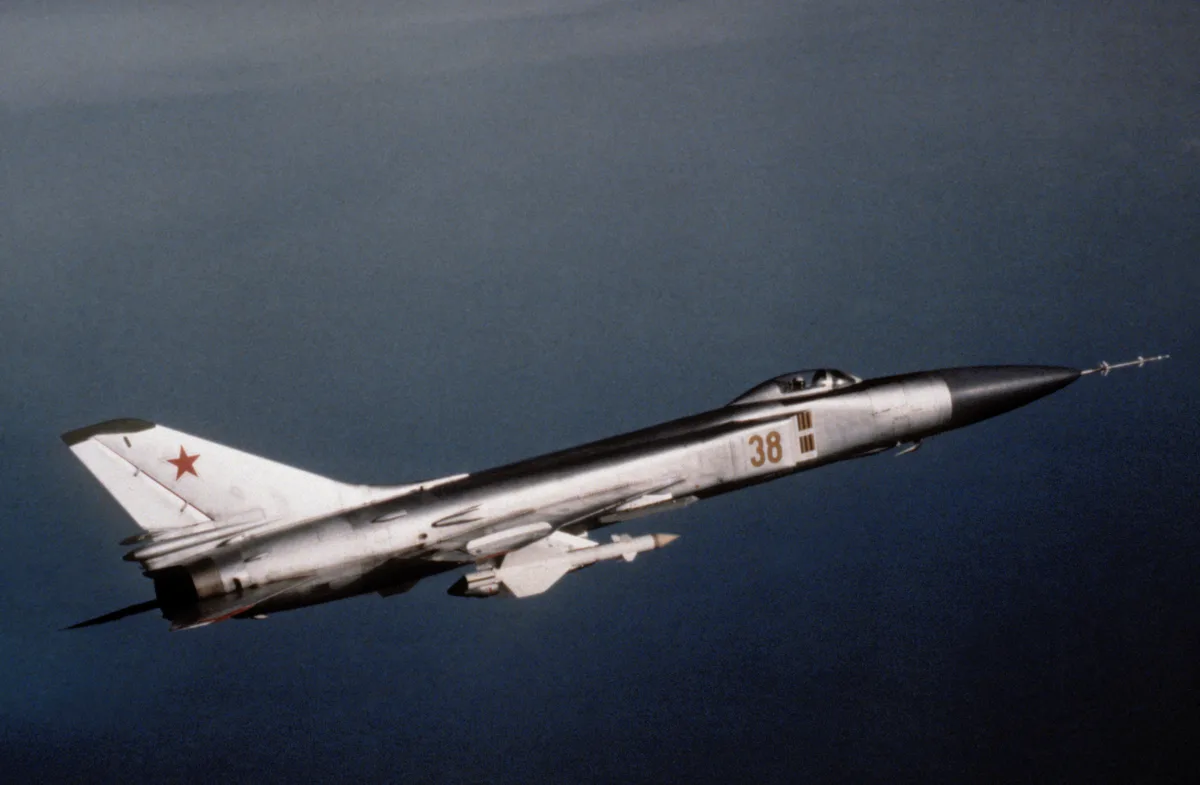
Soviet Su-15 interceptor — aircraft of this type generated UAP encounter reports filed into the SETKA-MO military investigation program, which ran from 1978 through the fall of the USSR in 1991 — Wikimedia Commons / Public Domain
Credibility Assessment
Exceptional
Govt. AcknowledgmentOfficial ReportMilitary WitnessHistorical DocumentExpert Witness
Event Description
In the wake of the highly publicized Petrozavodsk incident of September 1977 — in which a luminous jellyfish-shaped object was observed over the city of Petrozavodsk by hundreds of witnesses and reported in the Soviet press — the Soviet Military-Industrial Commission authorized the creation of two parallel classified UAP research programs in 1978. These programs, collectively referred to as SETKA, operated simultaneously under two institutional frameworks: SETKA-MO under the Ministry of Defense, and SETKA-AN under the USSR Academy of Sciences.
SETKA-MO was the military investigation branch. It drew on mandatory reporting from Soviet military units, air defense networks, and naval forces. Military pilots, radar operators, and ground personnel were required to file standardized reports through SETKA-MO channels when they observed anomalous aerial phenomena. The program operated under strict classification with no public acknowledgment. SETKA-AN, the civilian science branch, operated through the Academy of Sciences and focused on physical analysis, statistical modeling, and theoretical frameworks for understanding observed phenomena.
Over thirteen years of operation — through the fall of the Soviet Union in 1991 — the combined SETKA programs accumulated reports on approximately 3,000 cases. Military analysts and scientists reviewed and categorized each case. By the program's own internal assessments, approximately 5 to 10 percent of cases remained scientifically unexplained after full investigation — a residual that Soviet researchers took seriously as evidence of a genuine physical phenomenon.
SETKA operated contemporaneously with the US Air Force's winding-down of Project Blue Book and the CIA's continued classified UAP monitoring. Soviet military data indicated that UAP incidents clustered disproportionately near nuclear facilities, military testing ranges, and strategic installations — a pattern that matched US military observations. General Maltsev's 1990 public statement and the subsequent Soviet military disclosures under Glasnost drew on the SETKA database. After the Soviet collapse, portions of the SETKA files were reportedly shared with Western researchers, confirming both the scope of the program and the consistency of its anomalous findings with Western records.
5 Observables Detected
Instantaneous Acceleration
Hypersonic Velocity
Low Observability
Trans-Medium Travel
Anti-Gravity Lift
Suspicious Activity
Intelligence Agency
Cover-up Actions
Men in Black
Disinformation
Witness Suppression