
Credibility Audit
4 factors- Pilot Witness+3
- Multiple Witnesses+2
- Historical Document+1
- Official Report+1
- 0–3
- 4–7
- 8–11
- 12–16
- 17+
DoD Observables
0 of 5- Instantaneous Acceleration
- Hypersonic Velocity
- Low Observability
- Trans-Medium Travel
- Anti-Gravity Lift
Event Description
Craft morphology
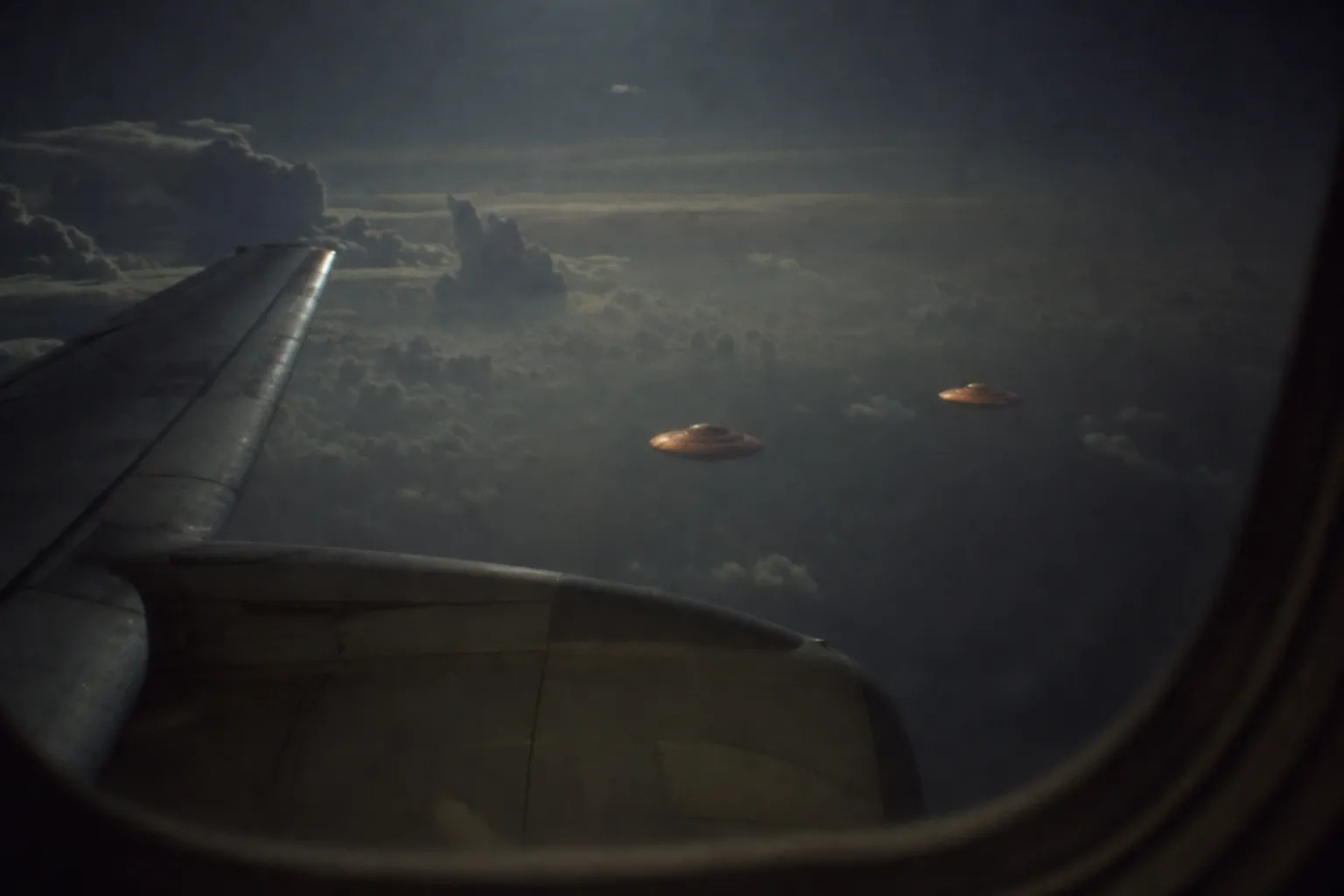
On December 7, 1966, an aircraft on the Beira–Luanda route — the primary air corridor between Portuguese Mozambique and the Angolan capital — was shadowed for an extended period by two unidentified aerial objects. A passenger first drew the crew's attention to the objects approximately 20 minutes before landing in Luanda. The captain confirmed the observation. Air traffic control dispatchers, queried during the encounter, confirmed no other aircraft were operating in the vicinity. The incident was considered sufficiently significant that it was formally reported to the American Embassy in Luanda, which transmitted an airgram to the U.S. Department of State sixteen days later, on December 23, 1966. That document, classified at the time, was subsequently declassified by the National Security Agency and is available in the NSA's public UFO archive — constituting one of the very few US government records formally documenting a UAP encounter in sub-Saharan African airspace.
The primary witnesses were the aircraft captain (unnamed in declassified text) and a passenger who initiated the report. A captain of a commercial or charter aircraft on the Beira–Luanda route would hold a valid Portuguese colonial-era air transport licence and be subject to professional reporting standards. The American Embassy in Luanda was sufficiently persuaded by the account to transmit a formal airgram through diplomatic channels to the U.S. Department of State — a transmission that would have been made only if the Embassy staff assessed the report as credible and potentially of intelligence interest. This diplomatic-channel transmission constitutes a form of official credibility endorsement: the Embassy, operating under State Department reporting protocols, treated the incident as worth elevating to Washington.
Approximately 20 minutes before the aircraft's arrival at Luanda, a passenger noticed two objects shadowing the aircraft. The objects were described as displaying an orange sheen — a self-luminous or reflective appearance consistent with metallic or plasma-surface phenomena observed in numerous contemporaneous Cold War cases. The captain confirmed the observation. The objects appeared to be tracking the aircraft's course, maintaining a position relative to the aircraft rather than passing through or crossing its path. Dispatchers confirmed no other aircraft were operating in the corridor — ruling out the most immediately available alternative explanation. The objects departed or became unobservable before or upon landing.
The objects' apparent station-keeping behaviour — following an aircraft for approximately 20 minutes along a sustained heading while ATC confirmed no other aircraft in the area — is the core anomaly. An orangely luminous object that tracks an aircraft for 20 minutes without appearing on ATC radar or on any flight plan is behaviorally inconsistent with conventional aircraft, weather balloon, or atmospheric optical phenomena. The orange sheen description — appearing in multiple independent Cold War African airspace reports including the 1952 Casablanca and 1952 Dakar cases — suggests either a consistent material or emission characteristic. The fact that two objects were present, apparently operating coordinately relative to the aircraft, adds complexity.
No radar return for the objects is implied by the dispatch confirmation of clear airspace, though the document does not explicitly describe a radar no-return. No electromagnetic, instrument, or physiological effects are reported in the available summary. The primary evidentiary significance is documentary: the NSA-declassified State Department airgram constitutes a government record of the encounter. The original Portuguese colonial aviation authority records, if they existed, would likely have been lost with the transition to Angolan independence in 1975 and the subsequent civil war.
The American Embassy in Luanda formally transmitted the encounter via airgram to the U.S. Department of State on December 23, 1966 — sixteen days after the incident. This indicates the Embassy either received the report from the aviation authority, from the passengers or crew directly, or from an Embassy staff member with access to the information. The airgram was classified at the time of transmission. It was subsequently transferred to the NSA and ultimately declassified, becoming part of the NSA's publicly accessible UFO document collection. No known response from the Portuguese colonial aviation authority or the Angolan Portuguese administration is documented.
The original classification of the State Department airgram constitutes routine Cold War-era governmental handling of UAP reports rather than targeted suppression. The document has been fully declassified and is publicly accessible. The destruction or inaccessibility of Portuguese colonial aviation authority records — which likely contained any original pilot or passenger reports — is a consequence of decolonisation and civil war rather than deliberate UFO suppression. The case as it stands is therefore an example of a UAP encounter preserved through American diplomatic channels rather than local aviation bureaucracy.
The Angola 1966 case is significant because it is formally documented in a declassified US government record — the NSA/State Department airgram — rather than relying solely on civilian witness testimony. This places it in a class with cases like the Dakar 1952 and Casablanca 1952 incidents that achieved US intelligence service documentation despite occurring in African airspace outside American jurisdiction. The NSA's decision to retain and ultimately declassify this document suggests it was considered worth archiving within the broader US intelligence community UAP record. For Angola, it is the single most formally documented UAP encounter available in open sources — a Cold War-era government paper trail for an otherwise underdocumented airspace.