
Credibility Audit
3 factors- Military Witness+3
- Multiple Witnesses+2
- Official Report+1
- 0–3
- 4–7
- 8–11
- 12–16
- 17+
DoD Observables
2 of 5- Instantaneous Acceleration
- Hypersonic Velocity
- Low Observability
- Trans-Medium Travel
- Anti-Gravity Lift
Event Description
Craft morphology
British Honduras in 1973 — it would not become independent Belize until 1981 — was maintained as a British colony primarily because of the continuing Guatemalan territorial claim to the entire territory. Guatemala had never recognized British Honduras as a legitimate state and periodically threatened military action, prompting the British Army to maintain a permanent garrison at Airport Camp near Belize City. British Army Land Forces Caribbean included a rotating infantry battalion and supporting elements specifically tasked with deterring Guatemalan military adventure. The garrison was in a permanent state of heightened alert, and soldiers on guard duty were trained to report all unusual aerial contacts as potential Guatemalan reconnaissance.
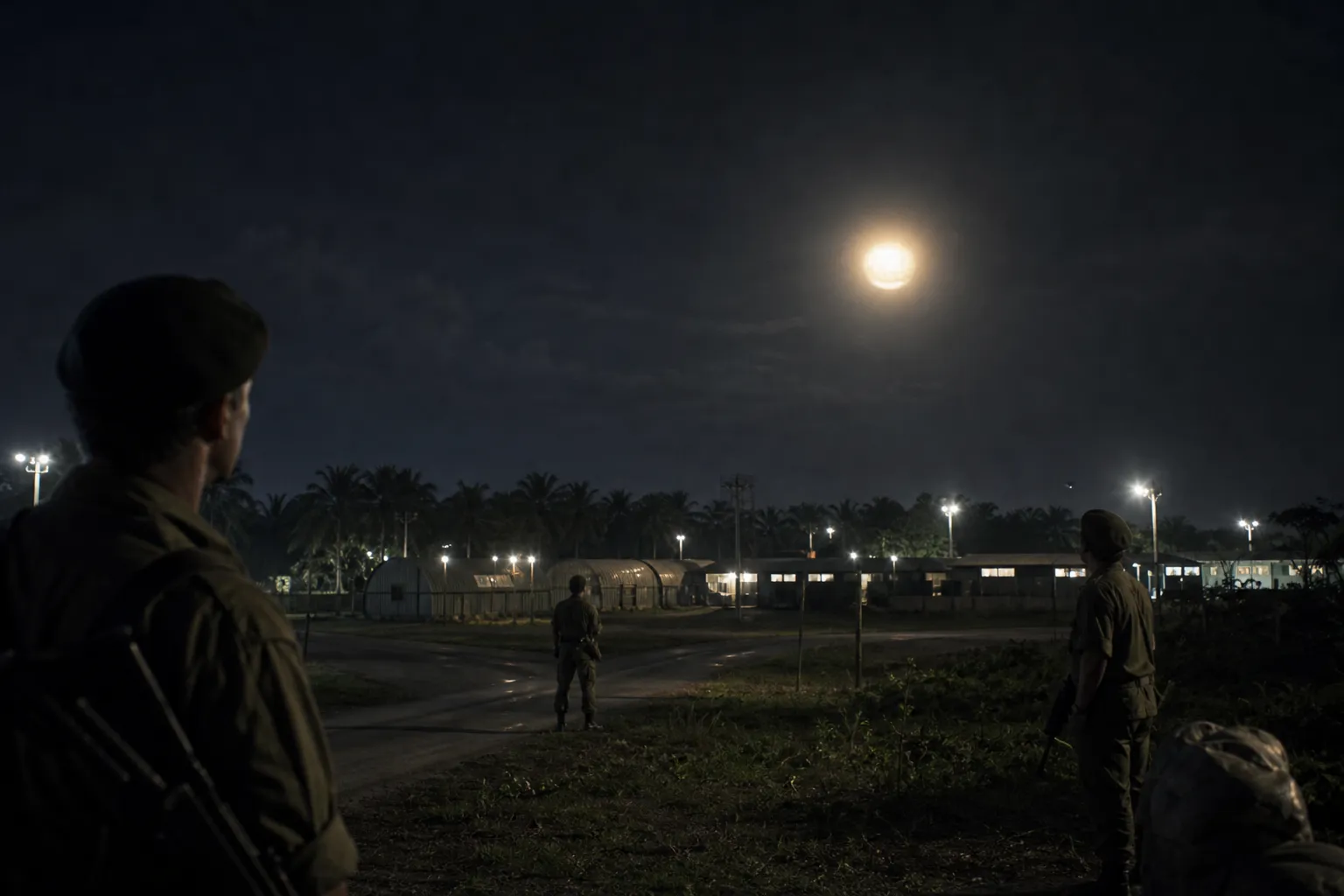
British Army soldiers on guard duty — trained infantry with formal recognition training and under the discipline of formal military duty — were the primary witnesses. At least three soldiers at different guard positions around the perimeter reported the object simultaneously, providing independent multi-point corroboration. The report was filed by the duty officer through Army channels to the Ministry of Defence in London, entering the MoD's UAP file for British Army overseas reports.
The object was described as a large luminous orb or sphere, much brighter than any navigation light or flare, moving at low altitude over the camp without sound. Multiple guards at separate positions observed it simultaneously. The object flew a path over the camp that allowed each guard position to have a clear, unobstructed view for 30–60 seconds. Its speed, while not extreme, was higher than any known helicopter and was completely silent. It then accelerated away toward the jungle interior at a speed the duty officer described as "impossible for any known aircraft."
Silent flight at low altitude, brightness exceeding any known aircraft lighting, and sudden high-speed departure were the primary anomalies. In a garrison specifically alert for Guatemalan reconnaissance aircraft, an unidentified object that could not be attributed to the known inventory of Guatemala's small air force was taken seriously. The multi-point simultaneous observation from three different guard positions provided strong independent corroboration.
No radar or instrument effects are documented. Airport Camp's radar capability in 1973 was limited to the civil airport's approach radar, which was not integrated with the garrison's security systems. The primary evidence is the multi-witness military visual observation.
The duty officer's formal report entered British Army Caribbean Command and was transmitted to MoD London through standard reporting channels. UK MoD UAP files covering this period include British Army reports from overseas garrison postings. The report was classified under standard MoD UFO procedures.
Standard UK Official Secrets Act classification applied. No active suppression effort is documented. The garrison's security posture meant that any anomalous incident was handled quietly to avoid alarming the local population or providing information to Guatemalan intelligence.
The British Honduras 1973 sighting is significant because the heightened security alert at Airport Camp — specifically directed at aerial reconnaissance — means that these were among the most attentive and motivated military observers possible. Soldiers watching for Guatemalan aircraft were not going to misidentify a conventional object. The three-point simultaneous observation from independent guard positions provides strong corroboration. The case establishes Belize's presence in the British Army overseas UAP archive and contributes to the pattern of anomalous objects observed over British military garrisons in the Caribbean and Central American region.
Sources
- governmentUK Ministry of Defence — British Army overseas garrison UAP reports, 1973 (DEFE 24 series, National Archives Kew)
- mediaNick Pope, 'Open Skies, Closed Minds' (1996) — British Army overseas UAP reporting procedures
- mediaBUFORA — Caribbean and Central American British garrison case files, 1970s