
Credibility Audit
5 factors- Military Witness+3
- Multiple Witnesses+2
- Expert Witness+2
- Official Report+1
- Historical Document+1
- 0–3
- 4–7
- 8–11
- 12–16
- 17+
DoD Observables
0 of 5- Instantaneous Acceleration
- Hypersonic Velocity
- Low Observability
- Trans-Medium Travel
- Anti-Gravity Lift
Event Description
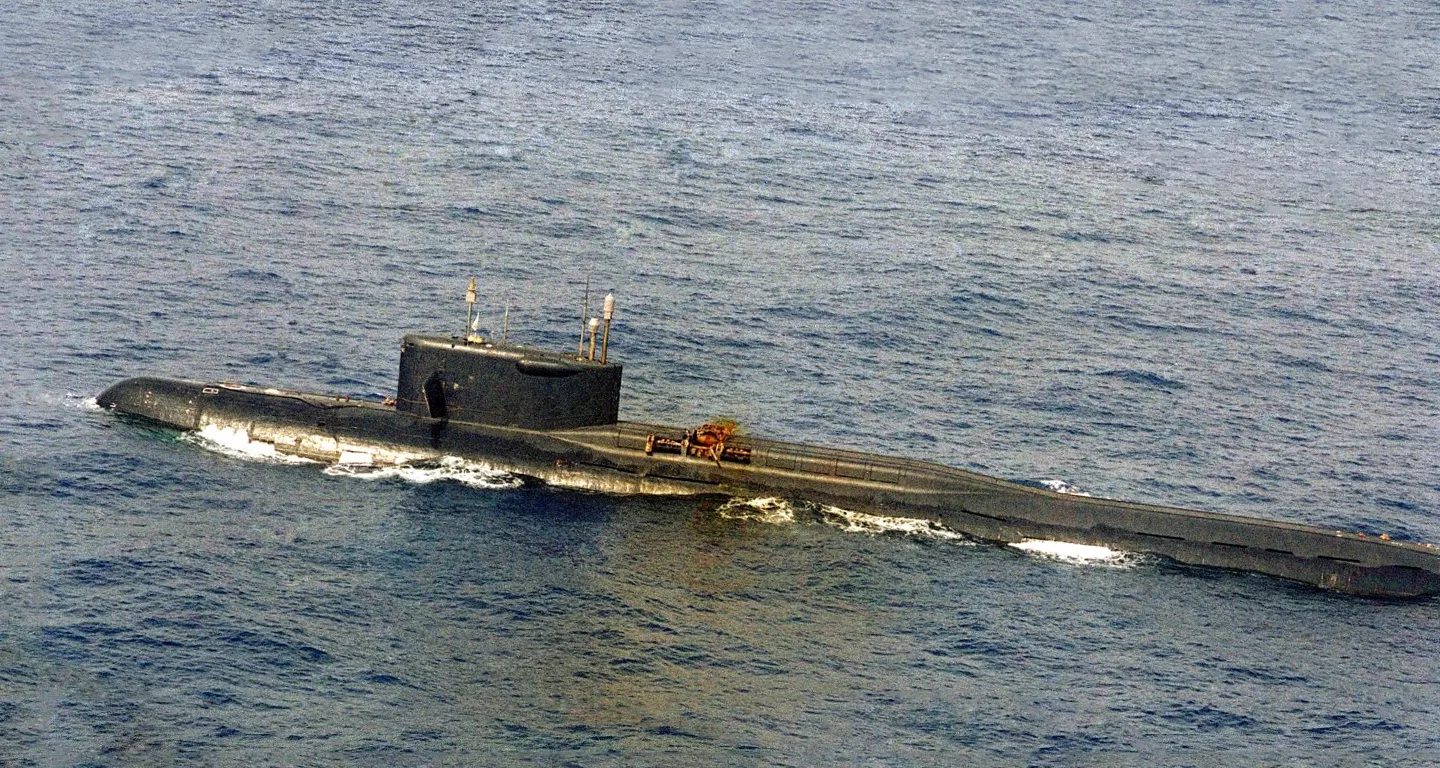
In the early 1970s, Soviet nuclear submarine crews operating in the Barents Sea, the North Atlantic, and the Pacific began reporting a recurring and unexplained phenomenon: mysterious croaking or frog-like sounds detected on sonar at specific, consistent frequencies, emanating from sources that could not be identified as any known vessel, marine animal, or geological feature. Soviet naval intelligence designated these contacts 'Kvakers' — from the Russian transliteration of 'quakers' — and quietly opened a classified investigation that would accumulate nearly 15,000 documented reports over eighteen years. The programme, never officially acknowledged, ran in parallel with the public SETKA anomalous phenomena investigation and represented the Soviet Navy's sustained, internal attempt to explain a phenomenon that appeared to track, respond to, and in some documented cases outmanoeuvre Soviet submarines.
The primary witnesses to Kvaker phenomena were active-duty Soviet Navy submarine officers and enlisted sonarmen, many serving aboard nuclear-powered ballistic missile and attack submarines. Their accounts were collected by a classified Navy intelligence research group established specifically to analyse the phenomenon. Among the officers who subsequently spoke about Kvaker encounters publicly were Rear Admiral Yuri Beketov, a former Pacific Fleet submarine commander, and Captain Nikolai Tushin, Deputy Commander of the Sevmash nuclear submarine construction brigade. The Soviet Academy of Sciences was formally invited by the Navy to form a joint investigative commission, lending institutional scientific credibility to the investigation. The commission's analysts worked for approximately a decade on the compiled testimony and technical data.
Sonarmen aboard Soviet submarines first detected Kvaker contacts when more sensitive sonar equipment became standard aboard Soviet nuclear submarines in the early 1970s. The acoustic signature was distinctive: a rhythmic croaking or clicking sound at constant, repeatable frequencies — unlike any biological or mechanical sound in Soviet Navy acoustic libraries. The contacts appeared to originate from beneath the submarine, at depths consistent with the vessel's operating zone. When submarines ascended from approximately 250 metres to 120 metres depth, Kvaker sounds would abruptly cease, suggesting the phenomenon was depth-dependent or tracking the submarine at specific depth thresholds. Rear Admiral Beketov documented a specific Pacific Fleet incident in which six unidentified objects in formation were detected and tracked by sonar at speeds exceeding 230 knots — more than five times the maximum speed of the Soviet Navy's fastest submarine, the K-222, and far beyond any known torpedo or underwater weapon. When the submarine surfaced, the objects followed — then departed into the air, transitioning from underwater to aerial travel.
The speed data from the Beketov encounter is the most technically anomalous element of the Kvaker record. 230 knots underwater (approximately 425 km/h or 265 mph) exceeds all known performance envelopes for submarines, torpedoes, autonomous underwater vehicles, or any other known human-made underwater propulsion system. The complete transition from underwater to aerial travel — observed by Beketov's crew as the objects surfaced and flew away — represents trans-medium capability that no 1970s or 1980s Soviet or American technology could replicate. The objects' apparent awareness of and response to the submarine's evasive manoeuvres, as reported by Beketov, suggested purposive behaviour. Electromagnetic interference with submarine instruments was reported during some encounters. The depth-dependent acoustic signature — ceasing consistently at 120 metres regardless of vessel type or location — implied the phenomenon had consistent physical properties, not the variability expected of natural biological or geological sources.
Detection was exclusively through sonar — no optical, radar, or photographic evidence was captured during Kvaker events, as the phenomenon occurred at depth in conditions that precluded visual observation. Instrument interference aboard submarines was reported in some accounts. In the case of K-219, which sank in October 1986 in the Hatteras Abyssal Plain following an explosion in a missile tube, Captain Tushin noted a large groove on the hull suggesting an external collision — theorised by some Soviet investigators as a Kvaker-related impact, though the official cause of the sinking was a missile fuel leak and fire. Approximately 15,000 acoustic and written reports were compiled by the Navy's research group, constituting the evidentiary corpus. The Soviet Academy of Sciences commission reviewed this material for approximately a decade without reaching a determination.
The Soviet Navy's response to Kvaker phenomena was compartmentalised and contradictory. On one level, a classified research group was quietly established within naval intelligence to collect and analyse all reports — an implicit acknowledgment that the phenomenon warranted systematic study. On another level, submarine commanders were explicitly ordered not to log Kvaker detections in official ship's logs, ensuring the phenomenon left no formal operational record even as it was being privately investigated. The joint commission between the Navy and the Soviet Academy of Sciences worked for approximately a decade and documented hundreds of anomalous ocean phenomena in addition to the acoustic Kvaker contacts. It reached no definitive conclusion. The two leading institutional theories within the investigation were mutually irreconcilable: Soviet analysts believed Kvakers might be a NATO anti-submarine weapon for tracking Soviet submarines; American analysts, when the phenomenon became known in the West, theorised the reverse — that Kvakers were a Soviet device. Neither government claimed responsibility.
The explicit order to submarine crews not to log Kvaker contacts in official logs represents a documented case of enforced suppression within the Soviet military chain of command. The effect was to create a two-tiered record: a classified accumulation of 15,000 compiled reports within the intelligence research group, and a set of official operational logs in which the phenomenon did not exist. All compiled reports remain classified in Russian archives. Captain Tushin, who spoke publicly about his conclusions regarding K-219's hull damage, remained cautious and qualified in his statements, consistent with ongoing classification obligations. The joint Academy-Navy commission's full findings have never been published or declassified.
The Kvaker programme represents one of the most sustained and institutionally serious investigations of an unexplained underwater phenomenon conducted by any government during the Cold War. The Soviet Navy's decision to establish a dedicated research group, invite Academy of Sciences participation, and maintain collection of reports for nearly two decades indicates that the Kvaker phenomenon was considered a genuine operational concern — not a matter of sailor superstition or misidentification. The Beketov encounter, with its six-object formation travelling at 230+ knots and transitioning from water to air, is one of the most technically specific USO accounts in the historical record, reported by an officer of flag rank. The programme's ultimate failure to produce an explanation — despite nearly two decades of data collection and scientific analysis — places Kvakers alongside the better-known SETKA programme as evidence that the Soviet government took the UAP/USO phenomenon seriously at the highest institutional levels, even as public acknowledgment was withheld. All substantive documentation remains classified.
Sources
- witnessRear Admiral Yuri Beketov — Pacific Fleet testimony on USO formations at 230+ knots; documented in Paul Stonehill & Philip Mantle, 'Russia's USO Secrets'
- witnessCaptain Nikolai Tushin, Deputy Commander Sevmash — confirmed glowing underwater objects and collision hypothesis for K-219
- mediaPravda.ru — 'The Death of K-219 Sub and Quakers', 2013
- mediaThe Debrief — 'Soviet USO Encounters: The Mysterious Quackers', 2022
- academicPaul Stonehill & Philip Mantle — 'Russia's USO Secrets: Unidentified Submersible Objects in Russian and Soviet Seas' (2019)