
Credibility Audit
6 factors- Military Witness+3
- Pilot Witness+3
- Video Evidence+2
- Govt. Acknowledgment+4
- Official Report+1
- Expert Witness+2
- 0–3
- 4–7
- 8–11
- 12–16
- 17+
DoD Observables
2 of 5- Instantaneous Acceleration
- Hypersonic Velocity
- Low Observability
- Trans-Medium Travel
- Anti-Gravity Lift
Event Description
Craft morphology
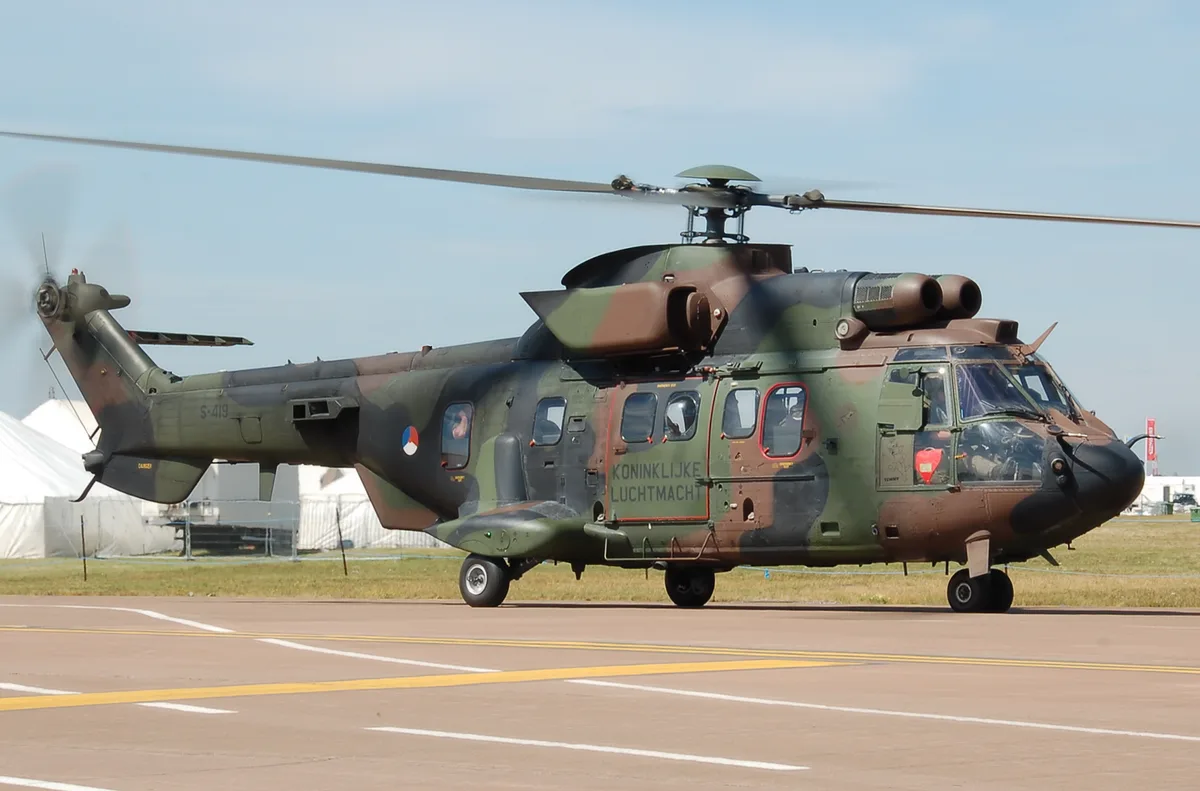
On November 11, 2014, a Chilean Navy Airbus Cougar AS-532 helicopter was conducting a routine patrol mission along the coast approximately 100 kilometers north of Santiago, flying at approximately 4,500 feet at 152 knots, when the crew observed an unidentified aerial object flying in restricted airspace ahead of them. The helicopter's Forward Looking Infrared (FLIR) camera operator, a Navy technician with extensive experience operating the system, locked onto the object and recorded approximately nine minutes of footage.
The object, described as flat and elongated, flew in overcast weather conditions and was not detected on the helicopter's onboard radar, nor did it appear on air traffic control radar for the sector. Air traffic control had no transponder contact and no filed flight plan corresponding to the object. The crew attempted radio contact on all military and civilian frequencies — there was no response. Throughout the observation, the object maintained a constant speed and heading broadly parallel to the helicopter's course, remaining at a consistent distance.
Most significantly, the FLIR footage shows the object emitting what analysts described as a 'hot gas plume' visible only in the infrared spectrum — a release of warm material in two distinct bursts that dispersed rapidly. This thermal signature was inconsistent with any known civilian aircraft, drone, weather balloon, or natural phenomenon identified by investigators. The object's thermal profile indicated it was generating significant heat from an internal source.
Chile's official government UAP investigation agency, the Comité de Estudios de Fenómenos Aéreos Anomalos (CEFAA), operating under the Chilean Civil Aviation Authority (DGAC), took the case. CEFAA convened a multi-disciplinary technical panel that included meteorologists, military aviation experts, radar specialists, and Chilean Air Force image analysts. The investigation took two years. In January 2017, CEFAA official General Ricardo Bermúdez officially declared the object an 'unidentified aerial phenomenon' and released the footage publicly — one of the most rigorous official government UAP conclusions ever rendered. The Chilean Navy case is frequently cited alongside the US Navy FLIR videos as among the most technically credible UAP footage in existence.