
Credibility Audit
5 factors- Govt. Acknowledgment+4
- Historical Document+1
- Official Report+1
- Military Witness+3
- Expert Witness+2
- 0–3
- 4–7
- 8–11
- 12–16
- 17+
DoD Observables
0 of 5- Instantaneous Acceleration
- Hypersonic Velocity
- Low Observability
- Trans-Medium Travel
- Anti-Gravity Lift
Event Description
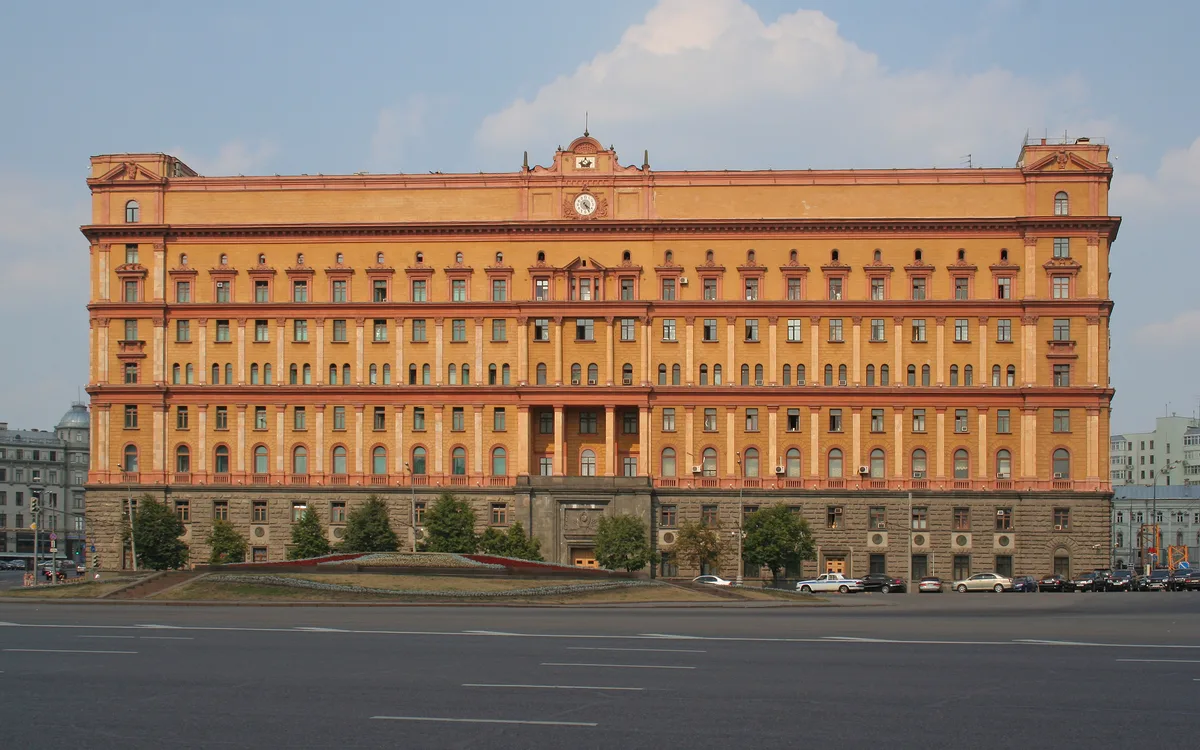
Following the collapse of the Soviet Union in 1991 and the dissolution of the KGB into successor agencies, a series of public disclosures emerged from former KGB officials regarding Soviet state-level UAP investigation activities. These disclosures — made directly to Western journalists and broadcast on mainstream US television — represented the first sustained confirmation from senior intelligence insiders that the USSR had maintained formal, classified UAP investigation programs.
Former KGB officer Boris Sokolov gave a detailed on-record statement confirming that a special KGB program had collected and investigated 124 UAP incidents. Sokolov described the program's scope, its internal classification level, and the types of cases investigated — including military radar contacts, pilot encounters, and ground landing incidents. His account was specific enough to be cross-referenced against known Soviet UAP cases from the 1970s and 1980s.
ABC News broadcast an interview with KGB officials who confirmed state-level UAP investigation at institutional level. The broadcast included documentary material from KGB files. Russian state media outlet Russia Beyond subsequently published confirmation from a former KGB agent regarding the existence of dedicated UAP collection files within the intelligence apparatus. These public statements, made in the context of post-Soviet glasnost-era openness, were treated by intelligence analysts as credible disclosures rather than disinformation — the USSR had no strategic incentive in 1991 to fabricate UAP investigation programs.
The KGB disclosures are significant in the broader UAP evidence record for two reasons. First, they establish a direct parallel between US and Soviet intelligence behavior: both superpowers maintained classified, dedicated UAP investigation programs running concurrently through the Cold War, both treated UAP as a national security matter, and both found a significant residual of unexplained cases after investigation. Second, they confirm that the Soviet military's encounter reports — including those described by General Maltsev in his 1990 official statement — were fed into a formal intelligence collection and analysis pipeline, not merely logged and ignored.