
Credibility Audit
5 factors- Pilot Witness+3
- Multiple Witnesses+2
- Radar Corroborated+3
- Govt. Acknowledgment+4
- Official Report+1
- 0–3
- 4–7
- 8–11
- 12–16
- 17+
DoD Observables
2 of 5- Instantaneous Acceleration
- Hypersonic Velocity
- Low Observability
- Trans-Medium Travel
- Anti-Gravity Lift
Event Description
On October 25, 2017, FAA air traffic controllers at Oakland Air Route Traffic Control Center (ARTCC) began tracking an unidentified aircraft on radar crossing from northern California into Oregon at approximately 37,000 feet. The object had no transponder signal, filed no flight plan, and was not responding to radio hails. Its speed was estimated between 100 and 200 knots — inconsistent with most commercial traffic at that altitude but also too slow for certain military jet profiles.
Oakland Center contacted multiple commercial airline pilots in the vicinity and asked them to report visually on the object. Pilots from American Airlines Flight 1095 and several other commercial aircraft confirmed visual contact with a white aircraft or object. One pilot described it as 'kinda beat up' and 'white' without identifying any specific aircraft type. The pilots could not identify what they were looking at.
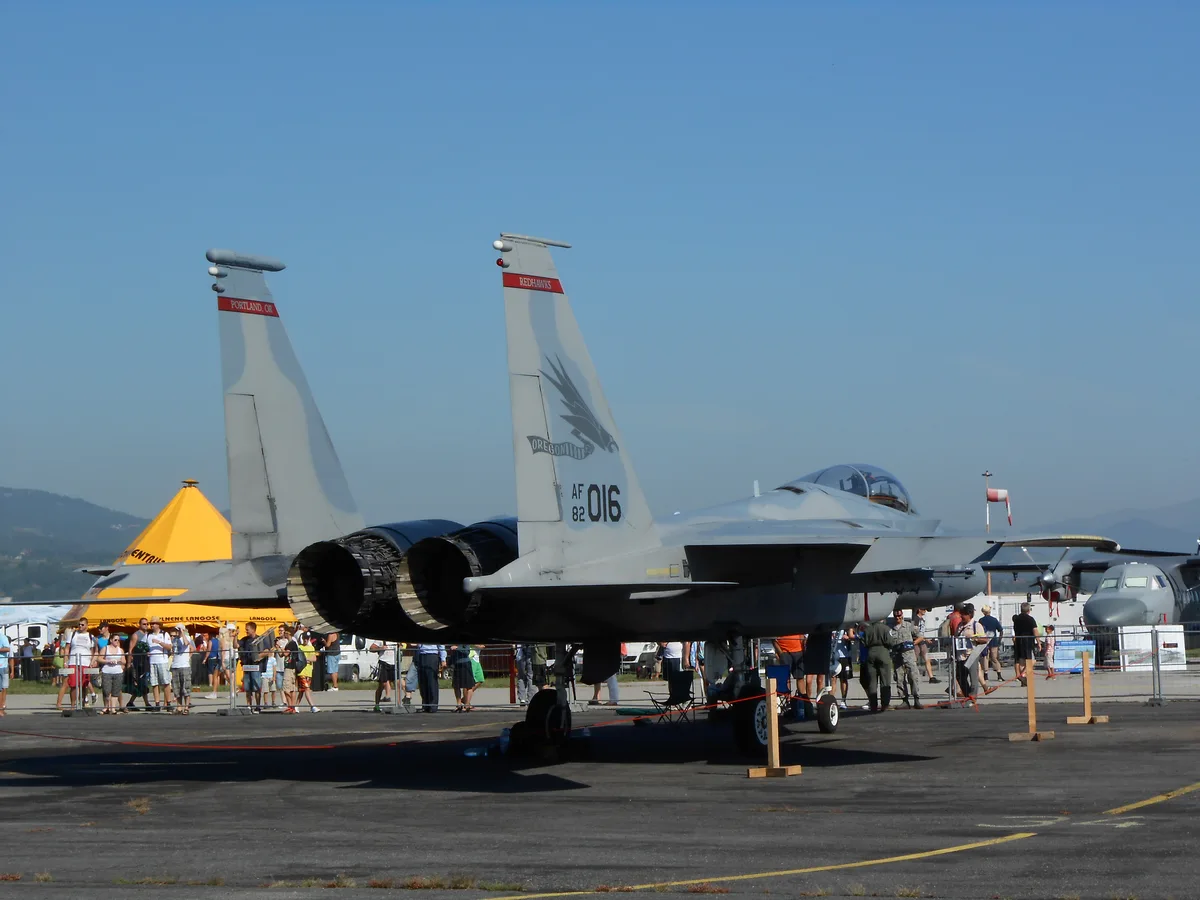
NORAD was alerted and F-15C Eagles from the 142nd Fighter Wing at Portland Air National Guard Base were scrambled to intercept. By the time the fighters reached altitude, the object had exited Oregon airspace over the Pacific coast and was not located. No radar contact was re-established offshore.
The incident became public in 2018 through audio recordings of FAA communications — obtained by The Drive's War Zone section and The Oregonian — in which Oakland Center controllers and pilots discuss the unidentified aircraft in real time with evident confusion. The recordings confirm the event was taken seriously as a genuine airspace anomaly by both the FAA and military.
Audio transcript highlights include a controller asking a pilot 'Can you just keep an eye out, 9 o'clock, see if you can see an airplane?' and the pilot responding 'Uh, we're looking — we don't see anything yet.' A separate crew reported briefly seeing the object before losing it. The case is notable because it involves simultaneous FAA radar tracking, multiple commercial pilot visual observations, and a NORAD intercept scramble — the combination representing one of the most procedurally documented airspace intrusion events of the modern era.