
Credibility Audit
5 factors- Military Witness+3
- Pilot Witness+3
- Multiple Witnesses+2
- Radar Corroborated+3
- Official Report+1
- 0–3
- 4–7
- 8–11
- 12–16
- 17+
DoD Observables
3 of 5- Instantaneous Acceleration
- Hypersonic Velocity
- Low Observability
- Trans-Medium Travel
- Anti-Gravity Lift
Event Description
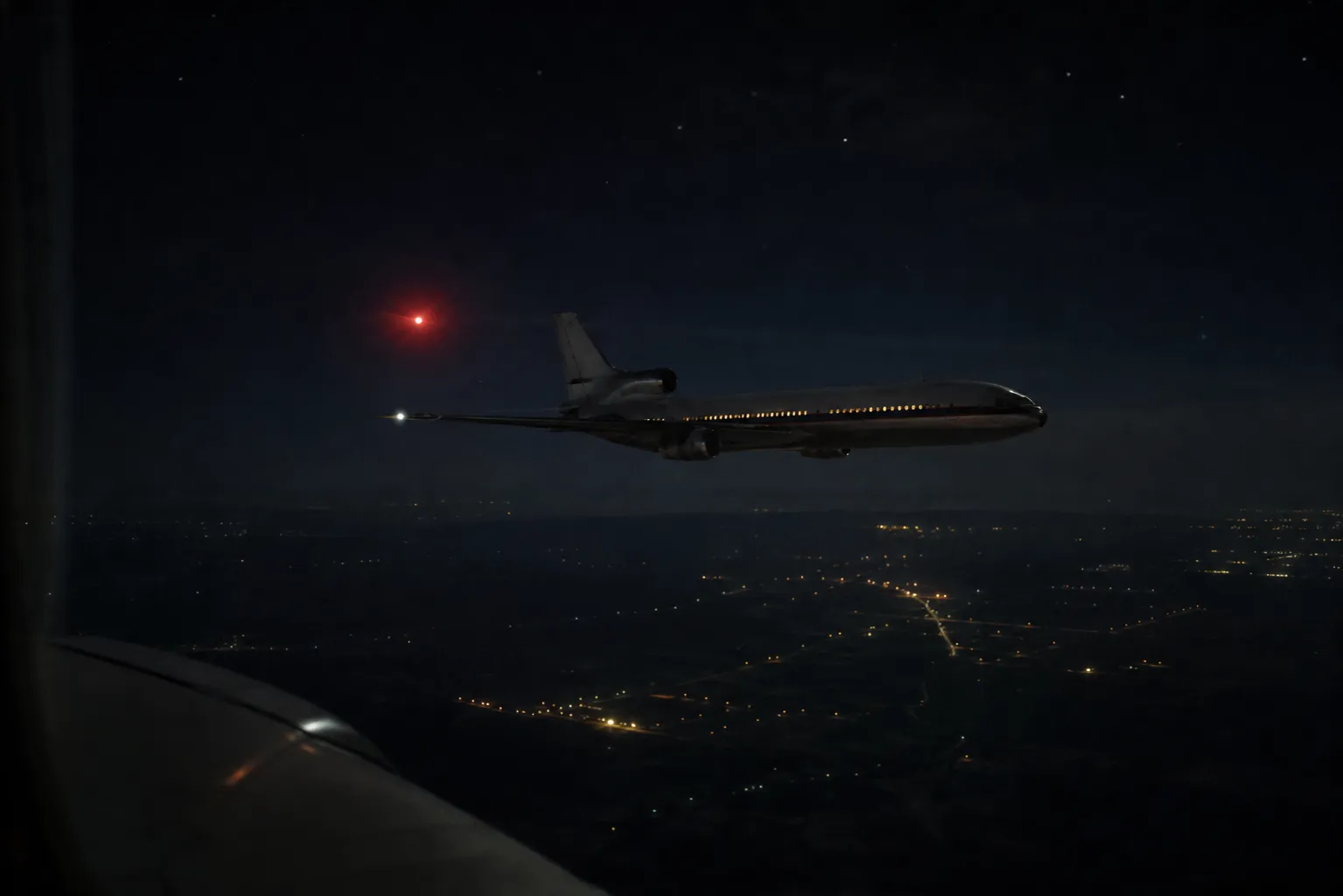
On the evening of August 16, 1977, a Pan Adria commercial flight operating the regular route from Zagreb to Belgrade to Titograd (present-day Podgorica) encountered an unidentified aerial object over central Yugoslavia. The encounter triggered an immediate military response — multiple MiG-21 jet fighters were scrambled — and was monitored in real time by Yugoslavia's most senior aviation controller, who had been urgently summoned to the operations centre. The incident was considered significant enough to nearly delay Marshal Josip Broz Tito's upcoming state visit to China, North Korea, and Russia.
The Pan Adria flight crew consisted of Captain Dobrosav Džeba (pilot-in-command), co-pilot Miljenko Bartolić, and flight mechanic Stanko Naletić. The aircraft carried approximately 50 passengers, several of whom reported the object. Zlatko Vereš, Chief of Flight Control for all of Yugoslavia — the most senior air traffic control official in the country — was summoned to the Air Traffic Control area at Surčin Airport to personally monitor the event, confirming that command-level personnel considered the incident exceptional. Vereš stated in post-event interviews that Yugoslavia at the time possessed "super modern technology and the most advanced flight control," and that he "had the opportunity to completely follow the entire event." Gunner Damir Bogunić, a military witness, stated that at least one military pilot who was initially selected for an interception sortie refused the mission, stating "it's over for him," suggesting the crew had prior knowledge or fear. Multiple radar operators across Yugoslav air defence facilities independently tracked the object.
Captain Džeba reported: "There we noticed one light — red, very intense — from our left side." The object appeared alongside the aircraft at flight altitude and matched the aircraft's course and speed precisely, tracking the Pan Adria flight as though escorting it. The glow was described as a single, extremely intense red light with no navigation strobes, no observable fuselage, and no audible engine noise perceptible to crew or passengers. The object maintained position relative to the commercial aircraft as altitude and speed adjustments were made, suggesting active tracking behaviour rather than coincidental parallel flight. Passenger witnesses on the left-side seats confirmed the observation independently of the flight crew. The encounter continued for a sustained period over the Belgrade approach corridor before the military response was initiated. When MiG-21 fighters moved to intercept, the object abruptly accelerated, reaching an estimated 9,000 km/h — approximately seven times the speed of sound — and departed toward Hungarian airspace. Vereš confirmed from the control centre that the object's departure track and speed were captured on Yugoslav radar systems.
An acceleration from commercial airliner escort speed (~800 km/h) to approximately 9,000 km/h in a matter of seconds — with no sonic boom reported from the departure vector — is consistent with both hypersonic_velocity and instantaneous_acceleration observables. The object demonstrated sustained proximity to a manoeuvring commercial aircraft at multiple altitude and speed settings, indicating either manned or autonomous precision station-keeping beyond any known 1977 system. The departure occurred without transition: witnesses described the object disappearing rather than receding. No exhaust, wake vortex, or thermal trail was observed by military pilots who entered the area. The fact that standard Yugoslav fighter interceptors — MiG-21s with top speeds exceeding 2,200 km/h — were assessed as entirely unable to engage the object supports the hypersonic performance profile.
Yugoslav air defence radar networks tracked the object throughout the encounter, providing the speed estimate of approximately 9,000 km/h for the departure. Vereš confirmed the radar documentation. No gun-camera footage from the scrambled MiG-21 sorties is publicly available. No physical evidence was recovered. The crew and passengers reported no electromagnetic effects on the aircraft's avionics; the anomalies were visual and radar-based. No physiological effects were reported by flight crew.
The Yugoslav military scrambled multiple MiG-21 fighters in immediate response to the encounter. Zlatko Vereš, the Chief of Flight Control, was personally deployed to the Air Traffic Control operations room to manage the situation — an act that itself indicates the military chain of command treated the event as a national air-security incident of the highest category. Following the incident, military personnel were forbidden from discussing the event by order; pilot Džeba stated he was told "never to talk about it" under explicit threat. The official public explanation, where one was offered at all, attributed the object to a meteorological balloon — an explanation that witnesses universally rejected given the object's documented behaviour and radar returns. The incident was serious enough that Tito's diplomatic schedule came under review, indicating it reached the highest political levels of the Yugoslav state.
Flight crew were placed under explicit orders of silence. The false official explanation — meteorological balloon — constitutes a documented disinformation narrative given the incompatibility of balloon behaviour with the observed radar data and departure speed. High officer ranks were reportedly barred from access to full information about the event. The incident was not publicly disclosed during the communist era; civilian aviation personnel and military veterans spoke on record only years after Yugoslavia's dissolution. The suppression pattern — crew silence orders, false official explanation, information compartmentalisation — mirrors documented Cold War suppression in the United States, France, and the Soviet Union.
The Pan Adria incident is the most thoroughly attested Yugoslav Cold War UAP encounter in the archive. It combines: named civilian flight crew testimony; the on-record account of Yugoslavia's most senior air traffic control official; contemporaneous radar tracking of hypersonic departure speeds; a military scramble response; and a documented disinformation overlay. The case is directly comparable in structure to the 1976 Tehran incident and the 1978 Kaikoura event — a commercial aircraft escort followed by military response and official suppression. Its placement in the archive anchors Serbia's documented UAP history to a single, well-sourced Cold War event that meets the skeptical-journalist standard: named witnesses, corroborating radar, official response, and a provably false cover explanation.