
Credibility Audit
6 factors- Military Witness+3
- Multiple Witnesses+2
- Radar Corroborated+3
- Govt. Acknowledgment+4
- Congressional Record+4
- Official Report+1
- 0–3
- 4–7
- 8–11
- 12–16
- 17+
DoD Observables
4 of 5- Instantaneous Acceleration
- Hypersonic Velocity
- Low Observability
- Trans-Medium Travel
- Anti-Gravity Lift
Event Description
Craft morphology
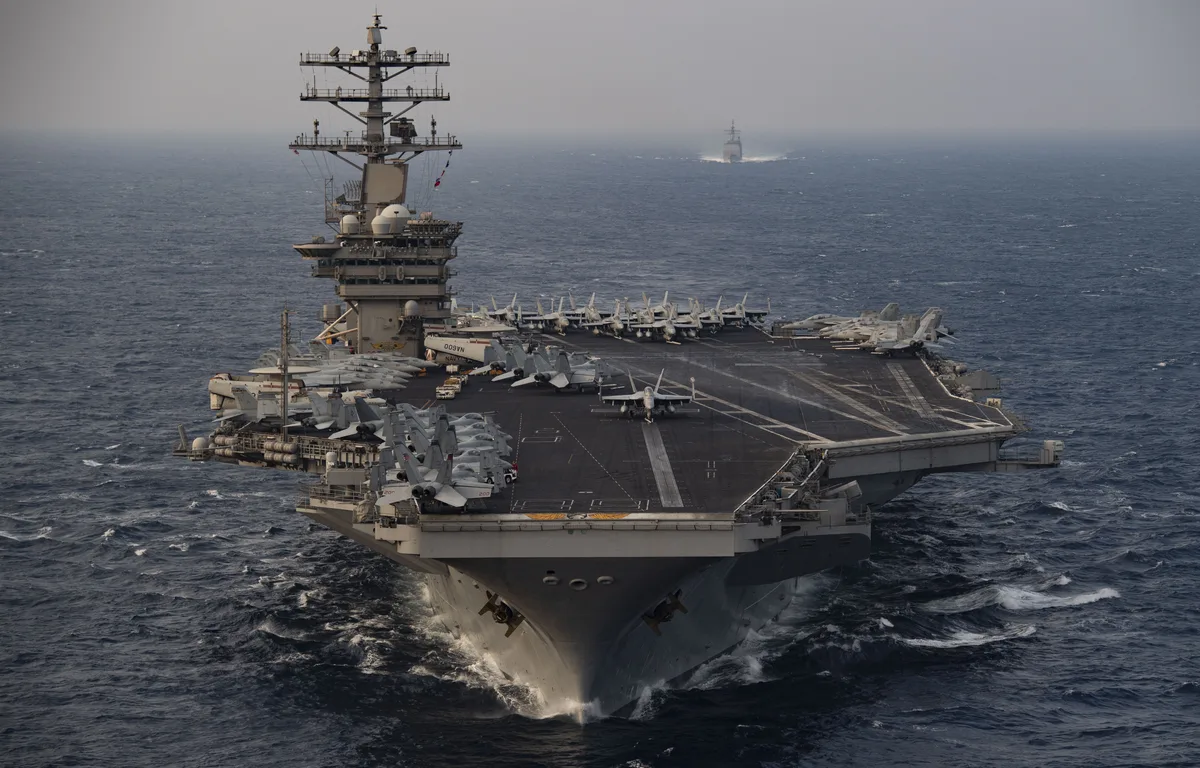
In the days preceding the November 14, 2004 visual encounter between Navy pilot Commander David Fravor and the Tic-Tac UAP, the USS Princeton — the Ticonderoga-class guided-missile cruiser serving as the air defense command ship for the USS Nimitz carrier strike group — had been tracking a series of anomalous contacts with its AN/SPY-1B Aegis radar system, one of the most capable air defense radars in the US Navy inventory.
Chief Fire Controlman Kevin Day, the Princeton's senior radar operator, later gave detailed public accounts of what the Aegis radar was detecting. Objects were appearing at altitudes of approximately 60,000 to 80,000 feet over the Southern California operating area — above the ceiling of any known conventional aircraft — and then plummeting vertically to just above the ocean surface in seconds. Day estimated the observed descent rate implied velocities of thousands of miles per hour, yet the objects showed no sonic signature. The contacts appeared and disappeared without following any ballistic or aerodynamic trajectory.
Day and fellow radar operator Operations Specialist Gary Vogt both reported that the contacts were appearing in the same geographic area near San Clemente Island, roughly 100 miles southwest of Los Angeles, over a period of several days. They were tracking what appeared to be a pattern of activity — not random transits. Day has stated he flagged the contacts up the chain of command and was authorized to vector an F/A-18 toward one of the objects, which led to Fravor's now-famous Tic-Tac encounter.
The Princeton's radar data was independently corroborated by the E-2C Hawkeye airborne early warning aircraft operating with the strike group. The Princeton's fire control system briefly achieved a radar lock on the Tic-Tac during Fravor's engagement — a lock the object then broke by departing at speed.
The pre-encounter radar tracking by the Princeton is significant because it establishes that the Nimitz UAP were not a one-time event but a sustained presence in the operating area, tracked by one of the most sophisticated radar systems in the US military. Day has stated he was 'gobsmacked' by what the radar was showing — behavior that bore no resemblance to any aircraft, missile, or natural phenomenon he had encountered in his career.