
Credibility Audit
5 factors- Military Witness+3
- Multiple Witnesses+2
- Radar Corroborated+3
- Official Report+1
- Historical Document+1
- 0–3
- 4–7
- 8–11
- 12–16
- 17+
DoD Observables
2 of 5- Instantaneous Acceleration
- Hypersonic Velocity
- Low Observability
- Trans-Medium Travel
- Anti-Gravity Lift
Event Description
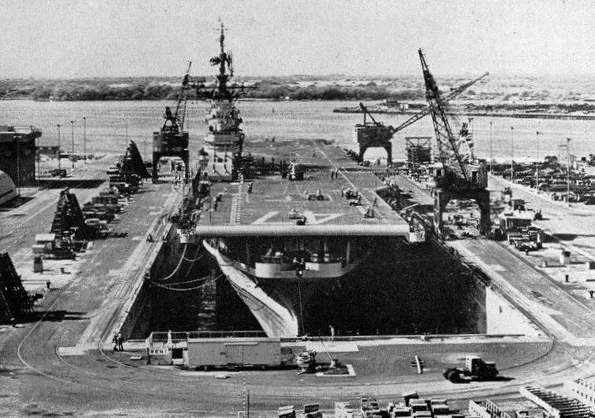
On September 21, 1952, the aircraft carrier USS Philippine Sea (CV-47) was operating in the Far East when its radar operators tracked an unidentified aerial object performing maneuvers inconsistent with any known aircraft. Three deck signal observers simultaneously achieved visual contact, reporting three elongated exhaust-like flames at the object's rear as it moved across the sky.
The radar return showed the object accelerating from approximately 600 miles per hour to an estimated 1,800 miles per hour over a period of roughly three minutes — a rate of acceleration vastly exceeding the performance envelope of any aircraft in either the US or Soviet inventory in 1952. The object maintained this velocity with no sonic boom audible to shipboard personnel. Radar tracking was continuous and clear throughout the observation.
The incident was formally documented as Far East Air Forces Intelligence Report IR-29-52, which designated it the first simultaneously confirmed radar-visual UAP contact in the Far East theater of operations. The report was forwarded through military intelligence channels and eventually integrated into the data being reviewed by Project Blue Book, the US Air Force's official UAP investigation program.
The USS Philippine Sea encounter is notable for several reasons. The simultaneous radar-visual contact by independent observers eliminated instrument artifact as an explanation. The documented acceleration profile — a threefold velocity increase in three minutes with no acoustic signature — placed the object's performance characteristics in a category that, by 1952 standards, had no conventional explanation. The formal intelligence report filing gave the incident an official evidentiary status that most UAP cases of the era lacked. It stands as one of the most rigorously documented military UAP encounters of the Korean War period and is frequently cited in analyses of the performance characteristics exhibited by UAP across multiple decades of observation.