
Credibility Audit
4 factors- Military Witness+3
- Pilot Witness+3
- Multiple Witnesses+2
- Official Report+1
- 0–3
- 4–7
- 8–11
- 12–16
- 17+
DoD Observables
2 of 5- Instantaneous Acceleration
- Hypersonic Velocity
- Low Observability
- Trans-Medium Travel
- Anti-Gravity Lift
Event Description
Craft morphology
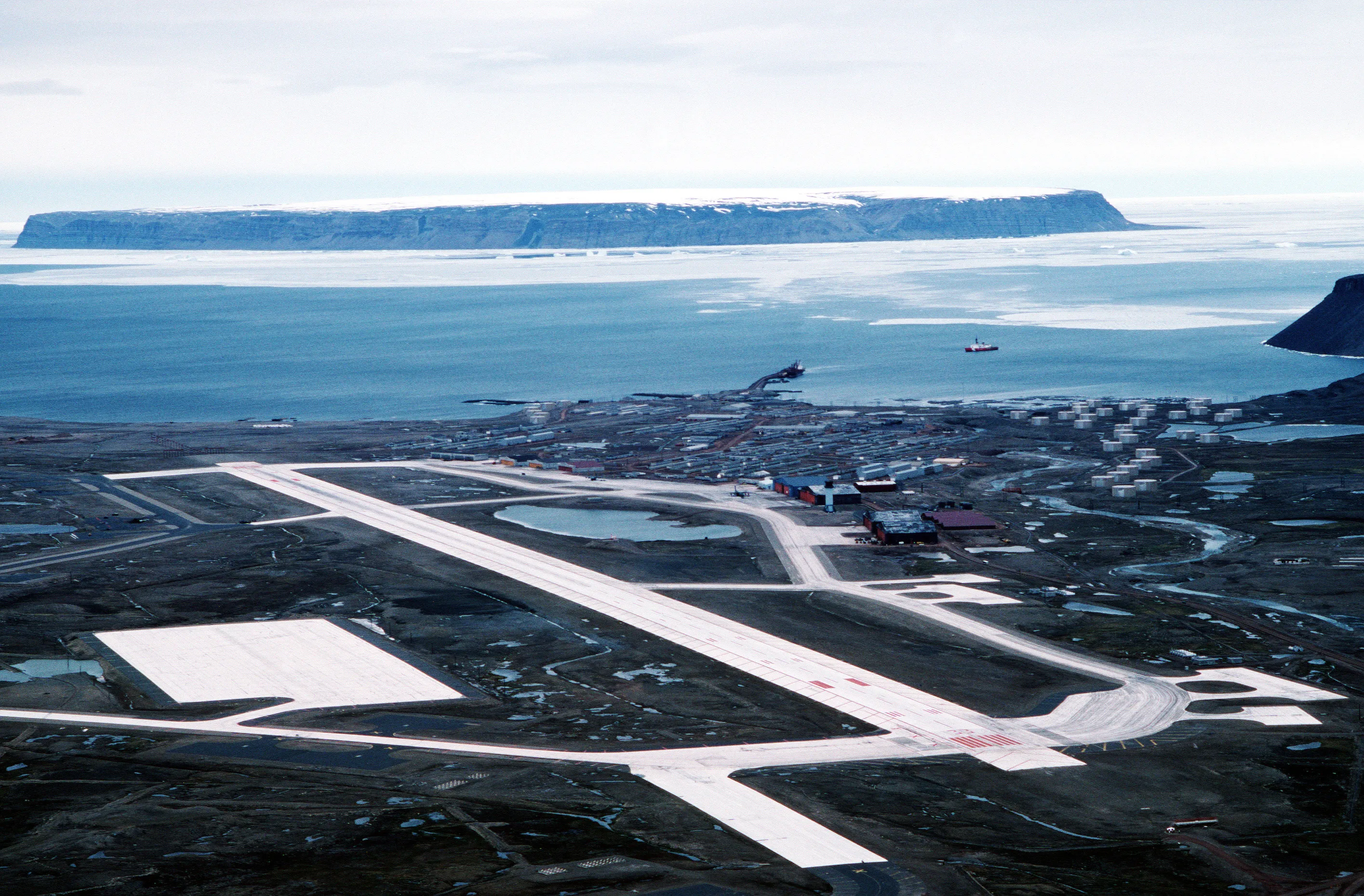
On the morning of August 29, 1952, two U.S. Navy pilots assigned to a P4Y-2 Privateer maritime patrol mission over the Arctic Ocean were conducting low-altitude surveillance operations roughly at 77°N, 75°15'W — open polar water west-northwest of Thule Air Force Base, Greenland. At 10:50 local time they observed three anomalous objects that would eventually be entered into Project Blue Book's formal record as an UNKNOWN: three white, disc-like objects performing a controlled, high-speed departure in close triangular formation after a period of apparent hovering. The case sits in the heart of the 1952 UFO wave — the single most active year in Project Blue Book's history, with the July Washington D.C. radar-visual events and hundreds of other reports, many from trained military aviators — and it remains one of the few well-documented instances of multiple-object formation behavior reported by U.S. military aircrews over the Arctic Circle.
The two witnesses were U.S. Navy pilots operating a P4Y-2 Privateer, a four-engine maritime patrol and anti-submarine warfare aircraft developed from the B-24 Liberator. Their identities were classified in Project Blue Book documentation and have not entered open sources. Both were trained military aviators with significant hours in Arctic operations — a flying environment that demands exceptional precision in navigation, meteorological awareness, and visual identification of surface and aerial contacts. Maritime patrol aviators are specifically trained to discriminate between surface objects, atmospheric optical phenomena, and airborne targets; they carry binoculars as standard equipment and are required to make precise, annotated contact reports. Their qualification to assess what they saw is materially higher than that of an untrained civilian observer. Both witnesses reported the same objects, independently corroborating the observation.
The two Navy pilots first observed three white objects that appeared to be hovering in formation at an altitude that the crew could observe from their flight level. The shape of the objects was consistently described as disc-like or spherical — consistent with the most frequently reported UAP morphology in the 1952 wave. The color was white. The objects were arranged in what witnesses described as a tight, triangular formation — three objects spaced to form an equilateral or near-equilateral triangle with consistent inter-object separation throughout the observation.
After the initial hovering phase, which persisted for the duration of the observation — approximately two to three minutes — the objects accelerated simultaneously and departed at high speed. The departure was not staggered or sequential; the three objects moved as a unit, maintaining their triangular formation geometry during the acceleration phase. This coordinated simultaneous movement by three separate objects is one of the most anomalous aspects of the case and has no conventional explanation within the performance envelope of any 1952 aircraft, Soviet or American. The witnesses had sufficient time to observe the objects carefully: two to three minutes at maritime patrol cruise speed provides multiple miles of airspace in which to track the formation, and the observation would have been made with the standard precision expected of naval aviators making a contact report.
Three features of this case are anomalous relative to known 1952 aerial technology. First, the coordinated hovering of three objects in a stable triangular formation at high latitude exceeds the performance capability of any known 1952 fixed-wing aircraft and would challenge even advanced rotary-wing platforms; in 1952 there were no operational helicopters capable of stable formation hovering at tactical altitude in Arctic conditions. Second, the simultaneous high-speed departure of all three objects while maintaining formation geometry implies either a single rigid structure — which does not match the visual description of three separate disc-like objects — or a degree of coordinated propulsion and navigation far beyond any 1952 drone or remotely operated platform, none of which existed in the Arctic theater. Third, the objects' appearance — white, disc-shaped, geometrically arranged — is not consistent with natural atmospheric phenomena (fog bows, parhelia, mirages) at the described altitude and behavior.
No instrument effects were reported in the available documentation. The P4Y-2 Privateer carried standard 1952 naval patrol avionics, including radio, navigation instruments, and potentially early radar. No electromagnetic interference, compass deviation, or radio disruption was noted in the Project Blue Book case file as preserved in the open record. The absence of documented instrument effects may reflect the brevity of the encounter (two to three minutes) or the distance between the Navy aircraft and the objects during the observation.
Project Blue Book, the official USAF program for investigating UAP reports, received this case and classified it as an UNKNOWN. This is a formal, documented classification indicating that Blue Book's investigators — who had access to classified Soviet and American aircraft performance data, atmospheric phenomena data, and expert consultants — were unable to assign the observation to any known natural or artificial phenomenon. The classification of a case as UNKNOWN in Project Blue Book required that conventional explanations be actively considered and rejected. Given the identity of the witnesses as trained naval aviators and the specific formation behavior described, the UNKNOWN classification is appropriately rigorous. No subsequent reclassification or resolution has appeared in the publicly available record.
The witnesses' identities remain classified in Project Blue Book documentation, consistent with standard military privacy protections for personnel involved in UAP reports during the Cold War era. No active suppression or disinformation campaign directed at this specific case has been documented. The case was entered into the Blue Book archive and has been accessible through the National Archives since declassification; it appears in Patrick Gross's exhaustive Blue Book unknowns compilation and in NICAP's 1952 case chronology. The unavailability of witness names limits independent follow-up but is not itself evidence of suppression beyond standard personnel privacy practice.
This case is significant for several compounding reasons. It is a Project Blue Book UNKNOWN involving two trained military aviators in a high-stakes operational environment at 77°N — an area of intense Cold War strategic sensitivity due to Thule AFB's role in the early warning and strategic bomber network. It occurred during the peak year of the 1952 UAP wave, when Project Blue Book was under maximum institutional scrutiny following the Washington D.C. radar-visual events. The three-object triangular formation — hovering, then departing simultaneously at high speed — is a behavioral signature that has appeared across multiple well-documented UAP cases from the Cold War era. As one of the northernmost formally unresolved military UAP sightings in Project Blue Book's record, it remains an understudied data point in the Arctic UAP pattern.