
Credibility Audit
5 factors- Military Witness+3
- Multiple Witnesses+2
- Radar Corroborated+3
- Official Report+1
- Govt. Acknowledgment+4
- 0–3
- 4–7
- 8–11
- 12–16
- 17+
DoD Observables
3 of 5- Instantaneous Acceleration
- Hypersonic Velocity
- Low Observability
- Trans-Medium Travel
- Anti-Gravity Lift
Event Description
Craft morphology
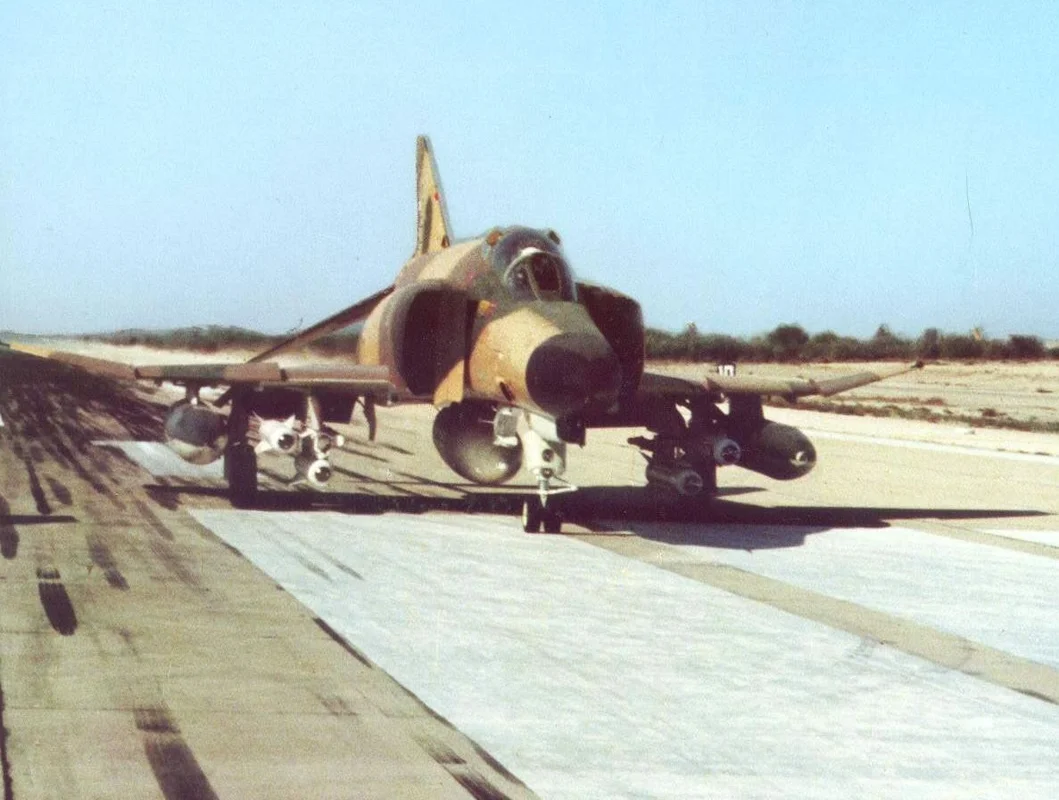
On the night of September 18–19, 1976, the Imperial Iranian Air Force scrambled two McDonnell Douglas F-4 Phantom II jets from Shahrokhi Air Force Base to intercept a brilliantly luminous object observed over Tehran by multiple civilian witnesses who had called the Air Force Command Post. The object appeared to be the size of a star but far brighter, and moved with purpose.
The first F-4, piloted by General Yousefi, was dispatched at approximately 1:30 AM. As the jet approached to within 25 nautical miles of the object, all instrumentation and communications failed simultaneously. Yousefi turned away; as he did, systems returned to normal. He was forced to return to base. A second F-4 was scrambled, piloted by Lieutenant Jafari, with Lieutenant Shokri as WSO. This aircraft established radar contact with the object, confirming a return the size of a 707 tanker aircraft. The object radiated brilliant white, red, orange, and green light in a pulsating sequence.
As Jafari's F-4 approached, a second, smaller object separated from the primary object and accelerated directly toward the F-4. Jafari attempted to fire an AIM-9 Sidewinder missile. His weapons control panel went completely dead and his communications failed simultaneously. He executed a hard break; the smaller object followed briefly before returning to the primary object. A third object then separated from the primary and descended toward the ground, illuminating the terrain below. A fourth glowing object appeared to separate and hover over the F-4's fuel tank.
The Defense Intelligence Agency filed a formal report on the incident, rating it 'excellent' — its highest classification for reliability — and noting the witnesses were 'experienced, technically competent' officers. The DIA report circulated within NATO intelligence channels. General Jafari testified publicly at the National Press Club in Washington DC in 2007. The case is considered one of the most thoroughly documented military UAP intercept events on record, with independent sensor confirmation, multiple trained military witnesses, and formal government documentation.