
Credibility Audit
5 factors- Govt. Acknowledgment+4
- Military Witness+3
- Multiple Witnesses+2
- Historical Document+1
- Official Report+1
- 0–3
- 4–7
- 8–11
- 12–16
- 17+
DoD Observables
0 of 5- Instantaneous Acceleration
- Hypersonic Velocity
- Low Observability
- Trans-Medium Travel
- Anti-Gravity Lift
Event Description
Craft morphology
In the pre-dawn hours of September 19, 1976, between 01:00 and 01:30 local time, an unidentified aerial object traversed the full length of Morocco's Atlantic coastline from south to north. Sightings were reported simultaneously from at least eight cities — Agadir, Essaouira, Casablanca, Rabat, Kenitra, Meknes, the Fez region, and Kalaa-Sraghna — spanning hundreds of kilometers of coastline. No audible sound was reported from any location. The object maintained an estimated altitude of approximately 1,000 meters and appeared to travel at a relatively slow speed, described by one witness as resembling an aircraft preparing to land.
Witness descriptions were strikingly consistent across dispersed locations. The object was reported as silvery, luminous, and either disc-shaped ("a type of silver colored luminous flattened ball") or tubular in form. Multiple observers noted intermittent bright sparks and fragments emitted from its rear as it passed. The Royal Gendarmerie — Morocco's national paramilitary police force — collected testimony from units stationed across the affected cities. Among the witnesses was Major Mohamed Lissaoui of the Royal Gendarmerie, who personally observed the object while traveling on the road from Kenitra at approximately 01:15. Lissaoui later provided sketches of the object to the US Defense Attaché (DATT) and briefed him directly on the sightings, describing the object's slow, parallel track along the coast.
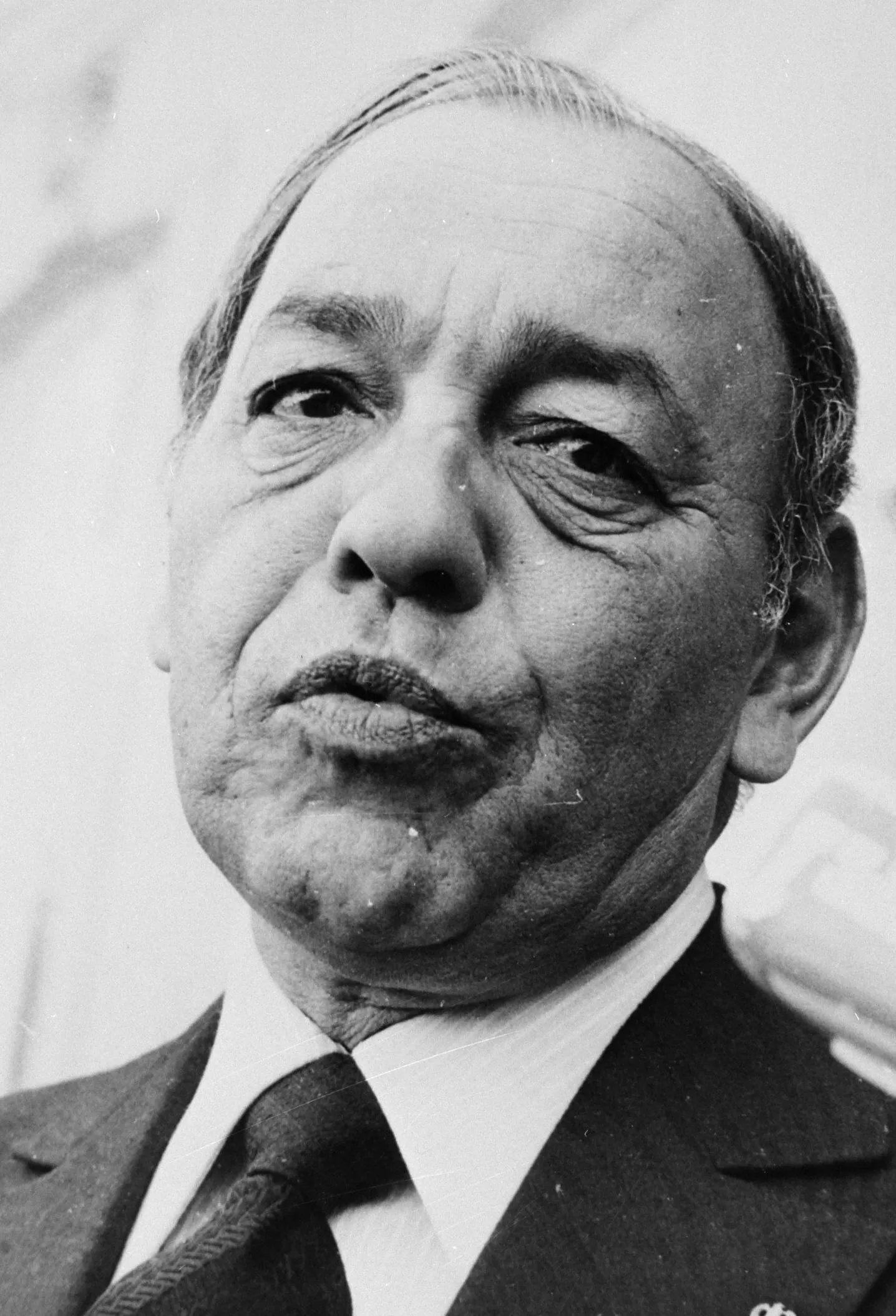
Four days after the event, on September 23, 1976, King Hassan II of Morocco took the exceptional step of instructing Colonel Housni Benslimane, Commander of the Royal Gendarmerie, to contact the American Ambassador in Rabat directly. The King was requesting any intelligence the United States could provide about the nature of the phenomenon. The US Ambassador cabled Washington seeking assistance, noting the "similarity of descriptions reported from widely dispersed locations" and pledging to "respond promptly to King Hassan's request." The cable — classified at the time and later released via WikiLeaks as 1976RABAT05209_b — was distributed to the Defense Intelligence Agency and circulated to the White House, the Secretary of State, the Joint Chiefs of Staff, the NSA, and the CIA.
The DIA investigator tasked with responding admitted publicly to the limits of official knowledge. In language that stands as one of the more candid official statements on any UAP event from the Cold War era, the investigator wrote: "I frankly do not know what to make of these sightings." A follow-up cable signed by Secretary of State Henry Kissinger (1976STATE247538_b) offered the US government's official position — that the object was possibly "a meteor, and probably a spectacular one, or a decaying satellite part" — while simultaneously confirming the USG was "unaware of any US aircraft or satellite activity in the Moroccan area which might have been mistaken for such sightings." The response acknowledged the event but offered no definitive identification.
In October 2012, Canadian amateur satellite tracker Ted Molczan proposed a retroactive explanation on the SeeSat-L mailing list: that the sightings were consistent with the re-entry of a Soviet rocket booster from a spacecraft launched two months earlier in July 1976. The Foreign Policy analysis of the case in April 2013, drawing on the newly public WikiLeaks cable, gave Molczan's hypothesis wide circulation. However, the proposed explanation remains contested. The DIA itself expressed explicit uncertainty at the time. The satellite re-entry hypothesis relies on trajectory correlation and post-hoc orbital modeling; no contemporaneous technical data linking the event to the Soviet booster was produced. Witness descriptions — including the slow apparent speed, the level flight path at consistent altitude parallel to the coast, and the absence of the typical ballistic arc of a re-entry vehicle — are not easily reconciled with a standard orbital decay profile.
The 1976 Morocco wave stands as one of the most thoroughly government-acknowledged UAP events in North African or Arab-world history. The engagement of a sitting head of state with the US intelligence apparatus — through formal diplomatic channels, at his personal initiative — is without parallel for the region. The DIA paper's distribution across the full national security hierarchy (White House, JCS, NSA, CIA, Secretary of State) places this event in the same administrative tier as the contemporaneous Tehran F-4 dogfight incident of the same month and year. It also prefigures the kinds of formal UAP reporting chains that would not be publicly acknowledged in the United States until decades later. Whatever the object's ultimate origin, the institutional response it triggered is documented, declassified, and on record.
Sources
- governmentUS Defense Attaché Cable 1976RABAT05209_b — WikiLeaks
- governmentState Dept. Response Cable 1976STATE247538_b (signed Kissinger) — WikiLeaks
- governmentCIA Reading Room — Unidentified Flying Objects Over Morocco (DIA paper)
- mediaThe Soviet Space Junk That Became a Moroccan UFO — Foreign Policy (2013)
- mediaWikileaks: King Hassan Of Morocco Asked US About UFO Encounter — Ghost Theory (2013)